

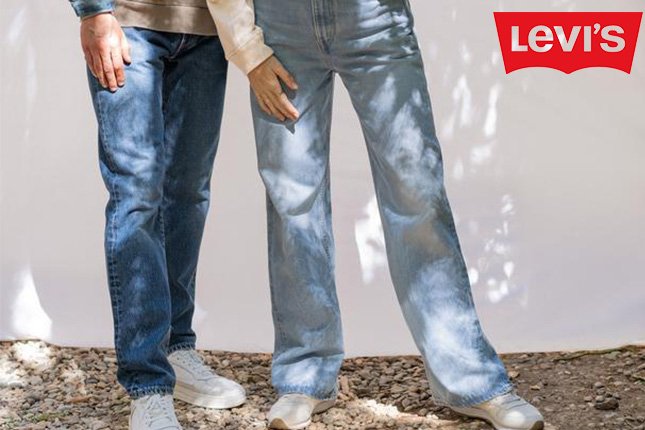
Levi’s has been working to make its offering more sustainable, with its iconic 501s the latest design to receive an eco-friendly overhaul. The work has been done to reduce the impact of denim on the environment. Jeans often come with a high environmental cost. These require a huge amount of energy and water to produce, also the intensive treatment and dyeing processes.
Overhauling its iconic 501s will undoubtedly bring the importance of sustainability to a wider audience, Levi’s believes. Ultimately, though, it’s still about maintaining that longevity that the 501 has always had.
Paul Dillinger, vice president of global product innovation at the brand, tells Vogue “It’s a really exciting moment for us. “We’ve been working towards this goal of bringing true circularity to the mainline for a long time. The idea that we could bring it to the 501, the marquee product of the brand, this 149-year-old design is a big deal because you don’t get to mess around with the 501 very often.
True circularity means you must make sure that you’ve designed a product in a way that means it can go back into its own system. Still, there is plenty of room for improvement, he admits. The new 501s currently contain only around 16% recycled cotton, a figure that Levi’s is hoping to improve on.
The quantity of cotton that we’ve integrated into this form doesn’t shed; it doesn’t weaken.
”

Levi’s can now increase the recycled cotton content, and eventually it will become probably 40% or 50% recycled. Another thing the company is working on is the dyeing process with chemical usage being a key issue when it comes to the recycling of garments. Currently, the jeans don’t use any chemicals on the manufacturing restricted substance list, but Levi’s is now exploring natural alternatives.

