

Once marketed as circular by default, the fibre is now colliding with microplastics, health concerns and green-claims risk.
For much of the past decade, recycled polyester has been fashion’s compromise material: scalable, affordable and easy to frame as progress. That consensus is fraying. New analysis—highlighted by work from the Changing Markets Foundation—suggests recycled polyester may exacerbate microplastic pollution, complicate product-safety narratives and expose brands to growing regulatory and legal risk.
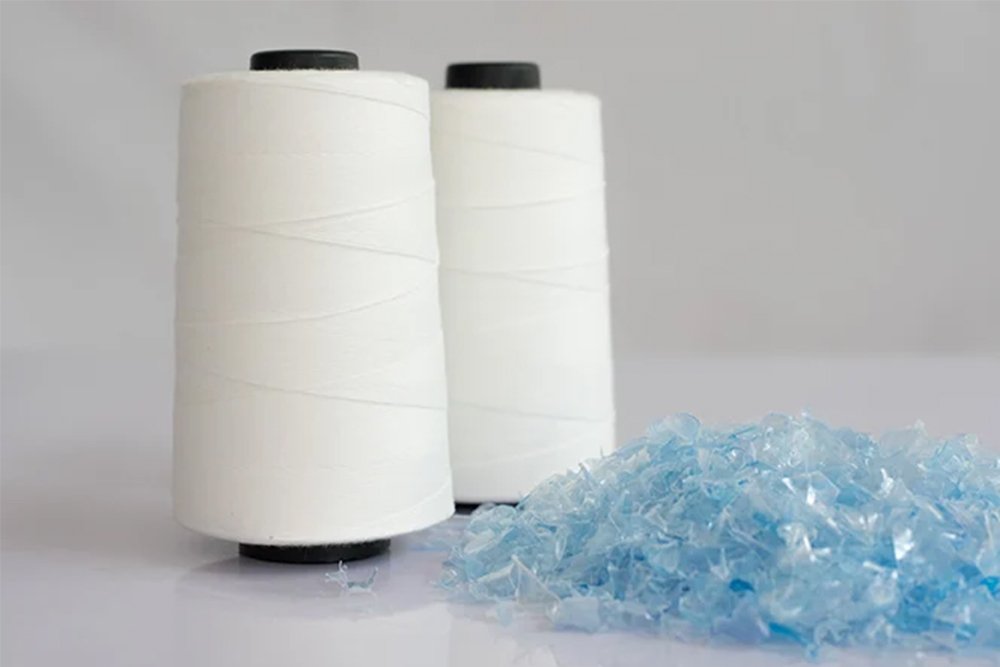
The core weakness lies in the circularity story. Most recycled polyester is not recycled clothing but plastic bottles turned into fibre. That diverts packaging waste, but it does not close the textile loop, nor does it reduce the overall volume of synthetic garments entering the market. Functionally, it is downcycling—rebranded as circularity.
Evidence is also mounting that recycled polyester sheds more, and finer, microfibres than virgin polyester during production, washing and disposal. These particles increasingly evade wastewater treatment and persist in the environment. What was once framed as an ecological issue is now drifting into a health and exposure debate, as microplastics are detected in air, food and human tissue. Regulators are watching closely.
A second risk is more immediate: claims. Audits of product marketing and labelling have revealed frequent inconsistencies in how recycled content is described across channels. As authorities in the EU and US tighten enforcement on greenwashing, such gaps are becoming liabilities. Recycled-content claims now require traceability and substantiation approaching that of financial disclosures.
For procurement teams, this changes the calculus. Recycled polyester can no longer be treated as a low-risk substitute for virgin synthetics. Verification gaps, performance trade-offs and claims exposure must be weighed alongside cost and availability.
Policy direction is narrowing the margin for error. Regulators are signalling that downstream fixes—filters, capture technologies or consumer guidance—will not suffice. Attention is shifting upstream, towards material choice and product design.
Recycled polyester is not disappearing. But its era as a sustainability shortcut is ending. For brands, the question is no longer whether it is recycled—but whether it can stand up to scrutiny.

