

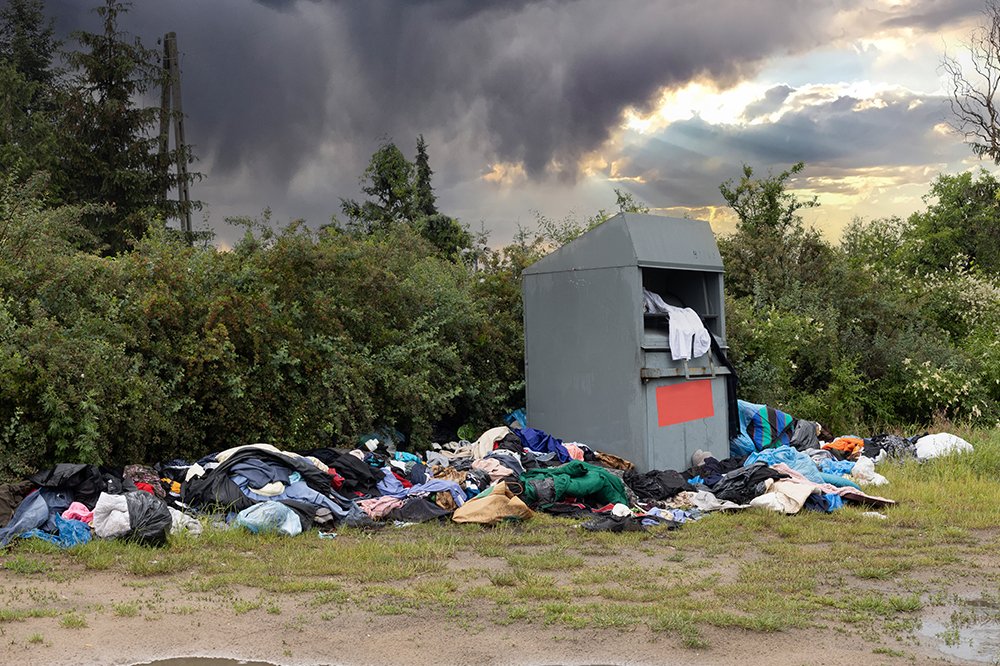
Organic cotton, recycled polyester and cellulose-based fibers may lower impact at production, but once garments are discarded, most still enter a waste system built for resale, downcycling or disposal — not true fiber-to-fiber recovery.
Fashion’s circularity problem is no longer a design story. It is an end-of-life infrastructure story. The central fact remains stark: less than 1% of discarded clothing is recycled into new textile fiber, despite years of marketing around take-back bins, recycled content and “closed-loop” collections. Boston Consulting Group said that in 2024 roughly 120 million metric tons of clothing were discarded globally, with about 80% landfilled or incinerated, 12% reused and substantially less than 1% recycled into new fibers.
Why the loop keeps failing
The problem is not consumer intent. It is system capability. Clothes cannot be handled through normal household recycling streams, and once collected separately, they still face a hierarchy that favors resale first, then downcycling, with recycling into new fiber the smallest outlet. The U.S. Government Accountability Office said textile waste causes environmental harm and emphasized that federal coordination on the issue remains weak, while most discarded textiles still flow into landfill or incineration pathways rather than circular recovery systems.
Sustainable materials hit the same barrier
This is where the sustainability narrative becomes uncomfortable. Organic cotton and lyocell-based fabrics are not immune to fiber degradation in mechanical recycling. Recycled polyester carries a different contradiction: it may begin as a recycled bottle, but turning that garment back into textile-grade fiber remains technically and economically difficult. Blends remain the toughest obstacle of all, because separating polyester from cotton, elastane or modal at industrial scale is still limited.
Policy is starting to catch up
California has become the most important U.S. policy test case. Under SB 707, producers selling covered textile products in the state must join the designated Producer Responsibility Organization. CalRecycle approved Landbell USA as that PRO on February 27, 2026, and producers must join by July 1, 2026, with statewide implementation scheduled for 2030. That will not create circularity overnight, but it does shift responsibility from consumers to the companies putting products on the market.
The commercial lesson is straightforward: until sorting, de-trimming, material separation and fiber regeneration scale together, most “sustainable” garments will still end up in a largely linear system. Repair, resale and reuse remain the most effective near-term forms of circularity — not because they are ideal, but because the true recycling loop is still under construction.

