

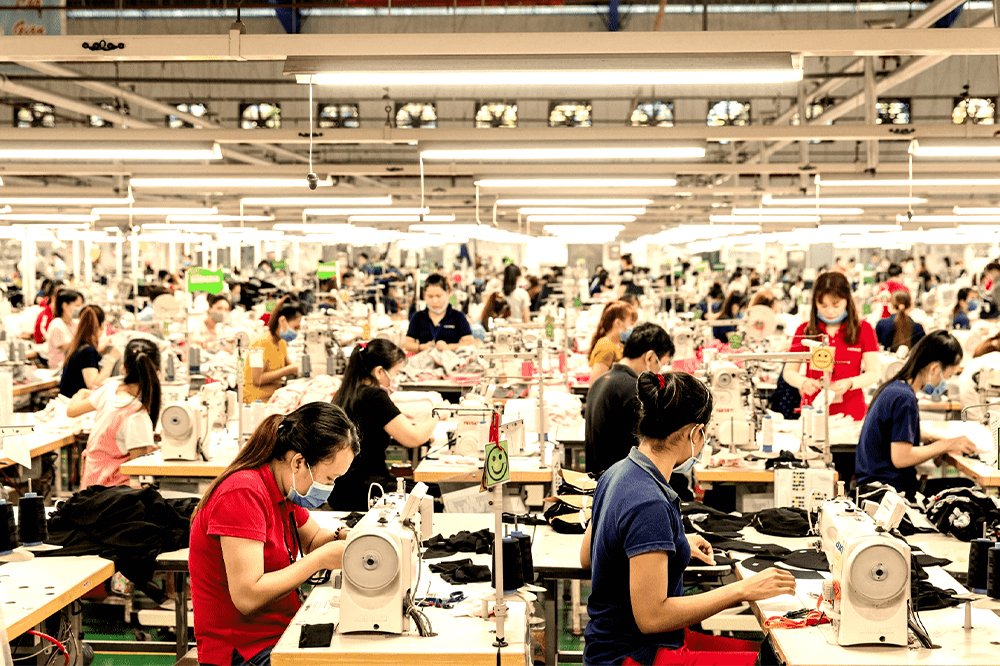
Vietnam has become a global garment powerhouse, yet its textile export success still rests on imported fabrics, fibres, and components, especially from Asia.
Vietnam’s trade boom matters particularly for textiles and apparel. The country’s export machine has expanded rapidly, with total exports reaching $475.04bn in 2025, supported by manufacturing sectors such as electronics, machinery and garments. But in textiles, Vietnam’s strength as an exporter is matched by a persistent weakness: deep dependence on imported upstream inputs.
What drives the sector
Vietnam remains one of the world’s leading apparel exporters because it combines competitive labour, extensive free-trade access and strong manufacturing capability. The United States is the crucial demand market, while the EU, Japan and South Korea remain important buyers. On the supply side, China continues to dominate imports, especially fabrics, accessories, machinery and industrial materials; South Korea, Japan and Taiwan are also central to Vietnam’s textile value chain. Official reporting in 2025 showed China accounted for around 40% of Vietnam’s imports in the first seven months.
Why it matters
This makes Vietnam highly competitive in cut-make-trim and garment assembly, but less resilient in yarn, fabric and input self-sufficiency. For textile exporters, that creates a double challenge: meeting stricter rules of origin under trade agreements while managing exposure to supply-chain shocks, freight volatility and geopolitical risk.
What comes next
Vietnam’s long-term opportunity lies in moving beyond garment assembly towards stronger domestic textile capacity. The real prize is not just exporting more apparel, but retaining more value within the supply chain.

