

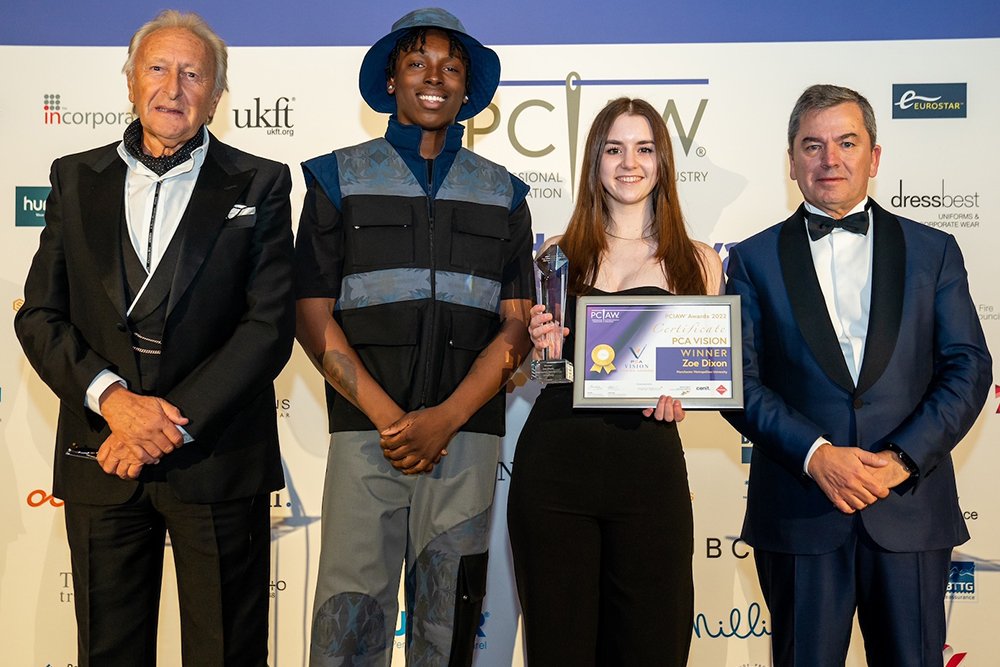
The latest student design competition PCA VISION exhibited the mutual influence of high-grade workwear, in problem-solving and performance fabrics on fashion. The Professional Clothing Industry Association’s PCIAW two-day Summit in London attained international status as undergraduate and MA students trained in textile courses involving both fashion design and technology from the UK, Europe, and the US participated in it.

The competition has become international, with undergraduates and MA students entering from various universities and colleges in the UK, Europe, and the USA, following various textile courses involving both fashion design and technology.
This year the designers hailed from various universities and colleges; from the UK’s Manchester Fashion Institute at Manchester Metropolitan University came Zoe Dixon, Georgia Randles, and Lucy Osborne; North Carolina State University Daniel Weispfenning; the University of Lisbon Sabrina Nunes; London College of Fashion Suet Yng Sharon Ng; from University of the West of England Bristol Rebekah Bradley, Lucy O’Connell.
The winner was Zoe Dixon of Manchester Metropolitan University. Her subject, working as a water quality scientist.
“I wanted my design to be as circular as possible, being already aware of fabrics created by recycling and reusing plastics found in the ocean,” Zoe said. Georgia Randles 2nd prize-winners modern plumber had investigated practical ways to manage a sometimes-hostile work environment, using specific tools carried in a variety of scenarios. Nylon fabrics, renewables, special belts, etc, and reflective colors.

Protection from extremes of temperature and conditions is a major requirement. Daniel Weispfennig North of Carolina University took 3rd Prize designing for a fisheries worker.
Commercial fishing and aquaculture industry suffer high rates of injury from falls overboard, cuts and punctures from machinery, and even fish. Daniel chose safety designs such as multifold pocket heads, waterproof and knife-proof trousers, and technical fabrics in multiple colours like nautical preferences fluorescent orange and green.
Fabric choices were crucial; some sought out deadstock, pre-consumer waste materials, recycled yarns looking at production methods and fabrics exploring new processes using less water, T-shirts in single jersey in recycled cotton; polo shirts in sustainable and biodegradable yarns; microfibre suede-palm gloves for increased durability’s unique advantages an example is given that Meryl performance fabrics do not release microplastics, and involve no water consumption, through hydrogen technology. The need for designing interchangeable male and female attire was noted. Fashion played a significant part in the designs. Collages with streetwear and workwear garments prompted similarities between modern sportswear leisurewear and workwear.
