


Researchers at Aalto University in Finland put to use liquid crystalline elastomers (LCEs), which were developed in the 1980s by weaving the LCEs fibers with common textile fibers. The new product responds to light and heat.
LCEs have even earlier been made into fibres, but no one used them in textiles. Aalto University from Finland, collaborated with the researchers of the University of Cambridge, to develop a new textile product that changes shape according to temperature levels. This innovation would open new opportunities for the apparel sector for adjustable aesthetics, and fabrics that could improve the thermal insulations of the users and assist in monitoring their health.
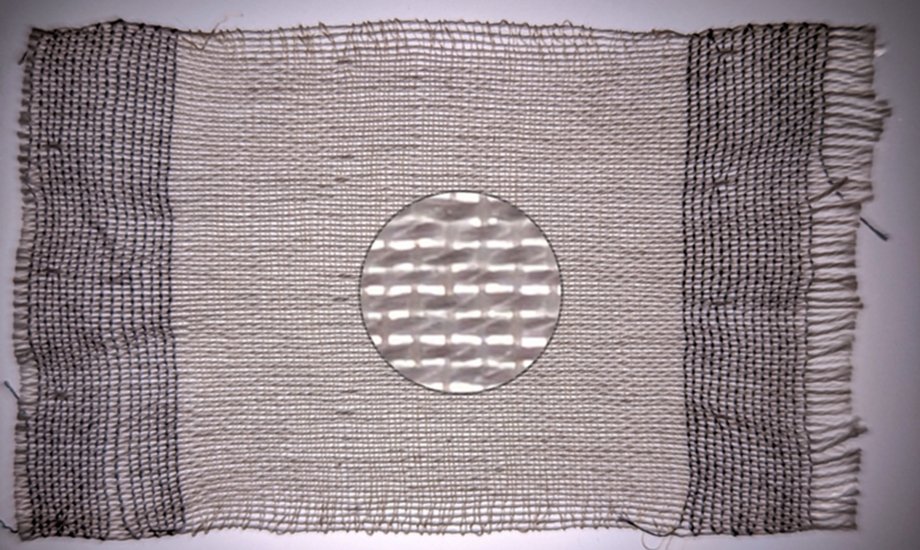
Two types of LCE yarns are available. One is stiff and the other is soft.
The researchers used both types of yarns to blend with normal yarns to produce fabric. Infrared texts of both soft and stiff yarn revealed that both contracted when heated and regained their original shape when brought back to normal temperature. This laid the foundation for producing a smart fabric.
The researcher who conducted this study said in the beginning they have no clarity on how to use the LCE yarn with industrial textile processes.
However, they found that both soft and stiff LCE yarns possess the same elasticity as exhibited spandex. This made it easier for the textile industry to select a type of conventional yarn in combination with the LCE yarn.
The researchers combined LCE yarns with linen and nylon in a radial pattern to weave a circle. That circle would lift itself into a cone when heated and become a flat circle again when the temperature is lowered.
The researcher expected to attract textile producers once they evaluated its demand in the market, particularly in the health circles.
