

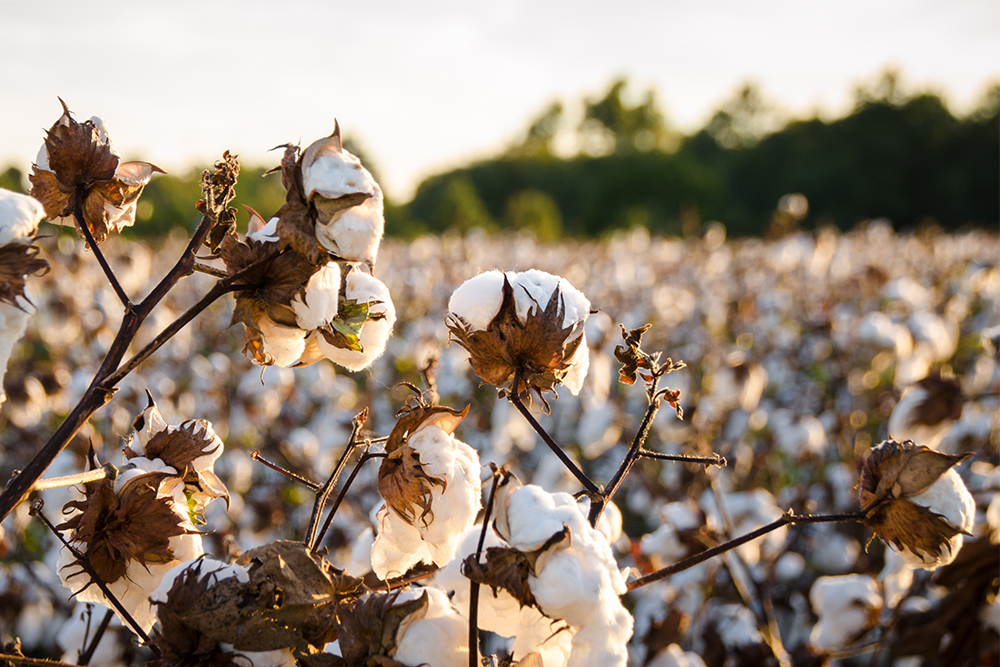
Cotton has shown resilience to fight back whenever cornered, providing hope to the farmers who grow the fibre in these difficult times, the companies that process it, and the clothing brands and manufacturers that use it in their products.
A cotton expert with 20 years experience says global market insight is an integral part of her role and she explains that having access to 50 years’ worth of data is what prompts her to highlight the fiber’s ability to stand up well in challenging times.
buy kamagra polo online https://medilaw.com/wp-content/uploads/2015/01/png/kamagra-polo.html no prescription pharmacy
Inflation was at the top of the list of concerns that respondents confessed to harbouring. Gasoline is up 65 percent, food 20 percent, and utilities 27 percent, making it a double-digit inflation. The apparel is up, too, by between 2 percent and 6 percent, depending on which numbers you look at.
buy phenergan online drweitz.com/wp-content/uploads/2015/06/png/phenergan.html no prescription pharmacy
However, when you have double-digit increases in things like utilities, energy, and food, apparel becomes discretionary.
buy kamagra gold online https://medilaw.com/wp-content/uploads/2015/01/png/kamagra-gold.html no prescription pharmacy
It was inevitable that this turmoil would lead to price volatility. Prices went up with the onset of covid-19 in the spring 2020 and continued to go up until a commodity sell-off began last May. There have been further spikes since then, notably because of the weather. Drought conditions in Texas caused the US Department of Agriculture to lower its cotton forecasts. Then, at the opposite extreme, severe flooding in the middle months of the year dramatically affected growers in Pakistan.
But cotton always recovers, which is supported by its 50-year history.
buy xifaxan online drweitz.com/wp-content/uploads/2015/06/png/xifaxan.html no prescription pharmacy
One of the reasons prices are low again is because production in the 2021-2022 cotton season exceeded mill use. According to Cotton Inc, this has the benefit of helping retailers and brands at a difficult time.
Recently when US consumers were asked what they are looking for in apparel, 77 percent said they prefer cotton, cotton blends, or denim. Cotton matters economically, with global production worth more than $50 billion per year. Almost 100 million families are involved in producing the fibre, many of them in emerging countries, which means the industry plays an important role in the fight against poverty and want. Cotton represents 80 percent of all the natural fibre in use today.
When consumers were in 13 countries which fibre they think lasts the longest in clothing, 57 percent said cotton. That’s two times more than the people who said polyester and four times more than those who said rayon.
Interesting points emerge from answers consumers give in surveys to questions about fibres they view as safe for the environment. Natural fibres come out on top, with more than double the number of consumers specifying cotton, compared to rayon, polyester, and nylon
It has been found that cotton breaks down in all types of aquatic environments faster than polyester, even when the cotton has a textile finish on it. In wastewater, according to the study, 89 o percent cotton fibres break down, which compares favourably to the 45 percent that a polyester-cotton blend will achieve and just the 5 percent of pure polyester. In freshwater, cotton’s score slips to 77 percent., Polyester on its own scores zero in freshwater, which means it does not biodegrade at all. Polyester’s biodegradability improves slightly in a salt-water environment, with 4% of the fibres breaking down over the study’s timeframe of 40 days.
buy fluoxetine online https://medilaw.com/wp-content/uploads/2015/01/png/fluoxetine.html no prescription pharmacy
Cotton’s percentage in salt water is 49 percent; poly-cotton’s is 14 percent.
Developments are going on to improve processes for producing longer-staple cotton fibres. This would help cotton in its never-ending competition with synthetics, but this will also be of interest to the denim industry.
To support sustainability, a newer recycling programme called Cotton Lives On is rolling out in Europe now. Consumers can drop off used garments at participating retailers and contribute to the effort to find new uses for the fibre, including in new consumer products such as roll-mats and mattresses. This is the circular economy in action and also shows why cotton deserves to have a bright future. Because cotton is resilient and renewable.
