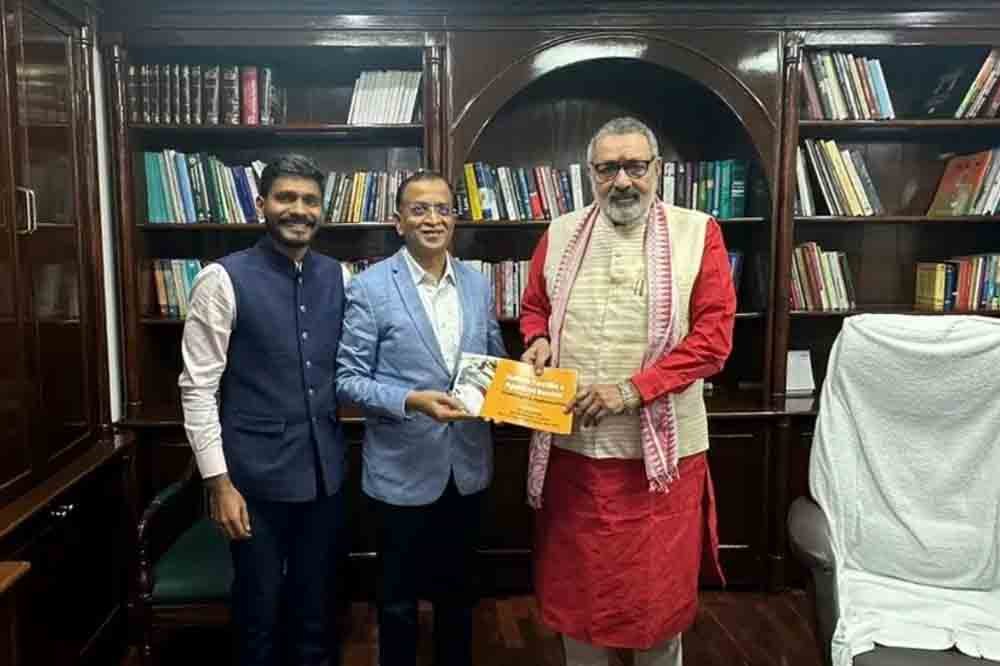
D Prabu, Convenor, Indian Texpreneurs Federation, Coimbatore, presented the growth plans for the textile and apparel sectors to the Textiles Minister Giriraj Singh, including the suggestion to double cotton yield to 1,000 kg per hectare.
The Coimbatore-based Indian Texpreneurs Federation (ITF) represents the entire value chain of textile manufacturing in Tamil Nadu with a member base of 500 manufacturing units. Improving cotton yield to 1,000 kg per hectare can be the game changer for the entire value chain of Textiles & also boost farmer income. The present yield of 450-500 kg/ha in India is one of the lowest when compared with other producing countries like the US, China, Australia and West Africa, said the federation’s convenor D Prabhu, who met the minister in Delhi.
The federation said that with suitable policy and directional changes, India can utilise the China plus One opportunity in apparel exports and improve the current monthly run rate of $1.5 billion apparel exports in a steady state manner. In comparison, China’s monthly run rate of exports currently is at $12 billion in apparel alone.
To grab more market share from the current 2 percent in the US man made fibre apparel market, which is valued at $35 billion, India needs to create knowledge partnerships with MMF specialised countries and also do similar exercises within Indian clusters.
As market diversification efforts, India should work with non-traditional markets like Japan, which has $23-billion potential. The team presented an idea of selecting five exporting companies each from five major clusters and hand holding them as a team. This will enable a positive mindset and experience towards these markets, Prabhu said.
Satellite mapping of cotton cultivation, new plans to boost e-commerce fashion exports and structural issues like import duties on cotton, inverted duty structure on MMF also were discussed in detail. Satellite mapping is a scientific way of knowing the crop size and such data will reduce speculation about output and help farmers and industry to take right calls, he said.
Fashion e-commerce exports are an opportunity for SMEs to tap the global audience with lesser cost and also with better margins. Both the Central and State textile ministries can create a separate cell to handhold SME apparel and home textile makers to build business structure in this fashion e-commerce space, he said.
Inverted duty structure on MMF was 18 per cent for fibre; 12 per cent on yarn and 5 per cent on fabric. More efficiency can be brought into the MMF eco manufacturing eco system with rationalising the duty structure, he said.
Textile and apparel sectors growth plan presented by Indian Texpreneurs Federation