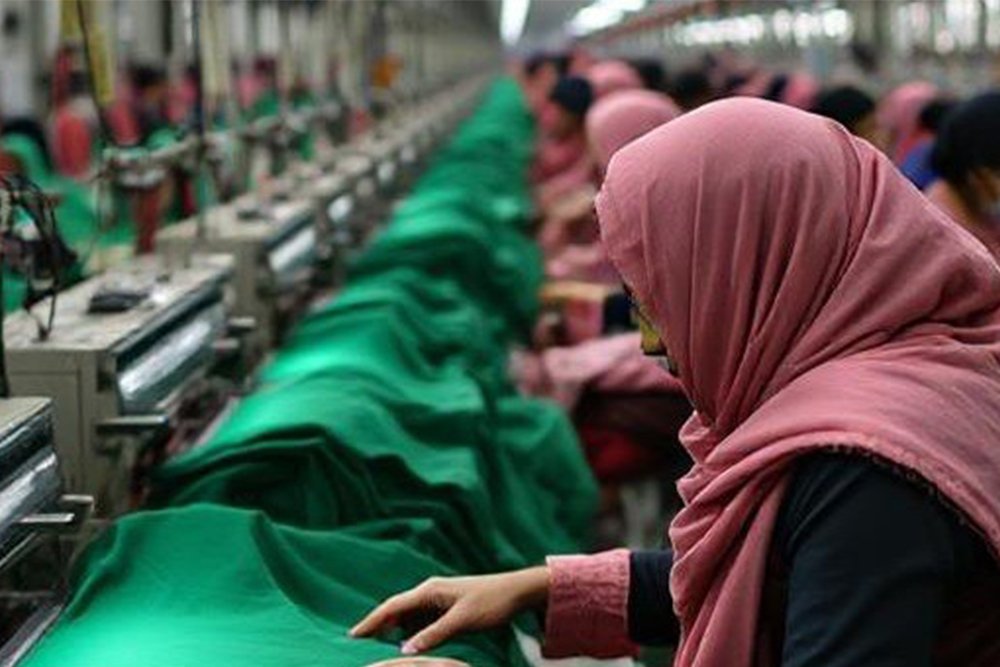
Bangladesh is putting product development, automation, advanced materials and sustainability at the centre of its next competitiveness model as low-cost manufacturing delivers diminishing returns.
Bangladesh will use the inaugural TIE–ITET Textile Innovation Expo 2026, scheduled for November 12–14 at ICCB Dhaka, to showcase a textile industry attempting to move from what organisers describe as a “cheap product manufacturer” toward a value-product manufacturing model.
Organisers expect around 50 textile, apparel and accessories factories and 200 technology and solution providers, together with about 5,000 visitors, 100 brands and buyers and more than 200 international delegates from over 30 countries.
Innovation moves onto the factory floor
The exhibition will focus on four areas: dyeing and printing innovation, textile materials, garment automation, and green and sustainable technologies. Factory Innovation Pavilions will showcase production-level projects, while an Open Innovation Area will connect manufacturers with researchers, universities, startups and engineers.
Technical sessions will cover new fibres, Digital Product Passports, traceability, textile recycling, productivity and energy conservation—areas increasingly influencing sourcing decisions.
The wider Textile Today Innovation Hub says it has already completed more than 270 innovation projects across over 80 factories.
Price gap makes upgrading urgent
The commercial pressure is evident in Europe. Bangladesh’s average EU garment export unit value fell 8.47% to €13.80/kg in the first half of 2026, while Vietnam’s increased to €29/kg. The gap partly reflects Bangladesh’s continued concentration in relatively basic, high-volume apparel.
Bangladesh’s RMG exports also eased from $39.35 billion in FY2024/25 to $38.70 billion in FY2025/26, reinforcing the need to extract more value rather than rely mainly on volume growth.
Pakistan competitiveness takeaway
The message is equally relevant for Pakistan. Both countries remain heavily exposed to price-sensitive apparel categories. Bangladesh is now institutionalising innovation around automation, MMF and functional materials, traceability, circularity and factory-level productivity.
Pakistan’s response should be similar but leverage its stronger upstream integration: connect fibre and yarn capability with faster product development, technical textiles, automated manufacturing and measurable sustainability performance.
The real competitive race is shifting from who can manufacture cheapest to who can create more value per kilogram, machine-hour and order.