

B&M Longworth’s story began in 2004 when the company’s engineers received patent protection for the DEECOM® invention, a revolutionary method for reclaiming high-value industrial stainless steel from polymer filters and other manufacturing components. The method uses steam and pressure to depolymerize polyester, to melt and reclaim a pristine filter for multiple re-use. DEECOM® was low in environmental impact, using pressure, supercritical steam, and emitting only water vapor.
In 2010, Longworth was advised to explore other applications for the technology as a reclamation for value waste streams. After research trials into the reclamation of carbon fibre from aerospace grade composite waste for Boeing in 2011 proved successful, Longworth filed for a second patent in various regions worldwide, based on the use of this technology for waste management. Clemson University stated that DEECOM® recovered fibres for Boeing were ‘pristine’ and difficult to distinguish from virgin grade material.
DEECOM® for plasticized and coated textilesFor carpets, fast fashion, technical fabrics, and flame-retardant fabrics. Following a number of projects with partnerships in the textiles, technical fabrics and garment industries, Longworth has become involved with innovative developments using DEECOM® for the reduction, reclamation and separation of textiles waste.One project, acknowledged by the government’s Select Committee in December 2021, saw the full circularity from waste polyester ‘fast fashion’ garments into accessories for new garments and items for the supply chain, reducing the need for raw materials used by this industry.Longworth’s EU funded Galactica project proved the separation of nylon and elastane in waste swimwear and gym wear can now be achieved. Previously this had been assumed as impossible. Textiles is a hugely important area of interest for Longworth, realizing significant environmental and sustainability outcomes.
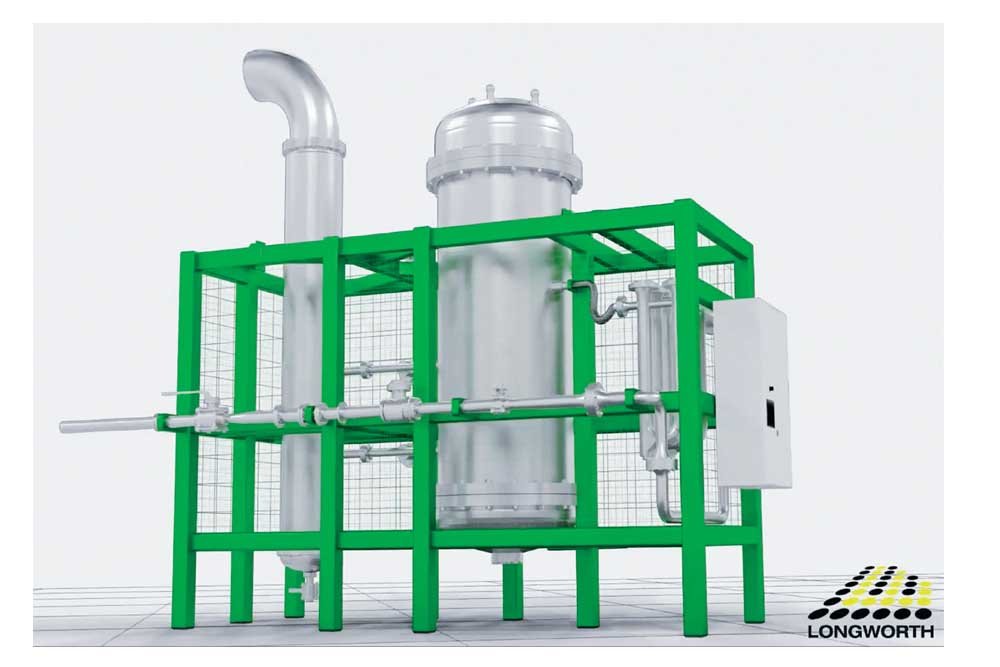
The DEECOM® process uses a combination of superheated steam pressure swings or compression/decompression cycles to remove frozen polymer from contaminated components and assemblies. The process takes place in a controlled environment contained within a custom designed pressure vessel.
The components to be cleaned are enclosed in the pressure vessel and the pressure in the vessel is then rapidly decreased by opening the blowdown valves. Depending on the polymer type, temperatures above 250oC will melt or soften the polymer, and a degree of hydrolysis will occur.When at pressure, the steam will penetrate fissures in the polymer where it condenses as superheated water. On decompression, it boils, instantly cracking the polymer and carrying away broken particles along with the softened, degraded polymer fragments from the outer faces.The pressure swing cycle is then repeated at frequent intervals and controlled automatically with no detrimental effect on the integrity of the filter media or metal structure.
