

Epson expands its industry–academia initiative, underscoring the strategic role of digital printing in a lower-impact textile economy.
Epson’s second Textile Academy event, held at its Textile Innovation Centre in Lutterworth, brought together students from Nottingham Trent University and Loughborough University for a day of hands-on training, industry insight, and sustainability-focused learning. The programme reflects a growing recognition that skills in digital textile printing will increasingly shape both employability and competitiveness in the fashion sector.
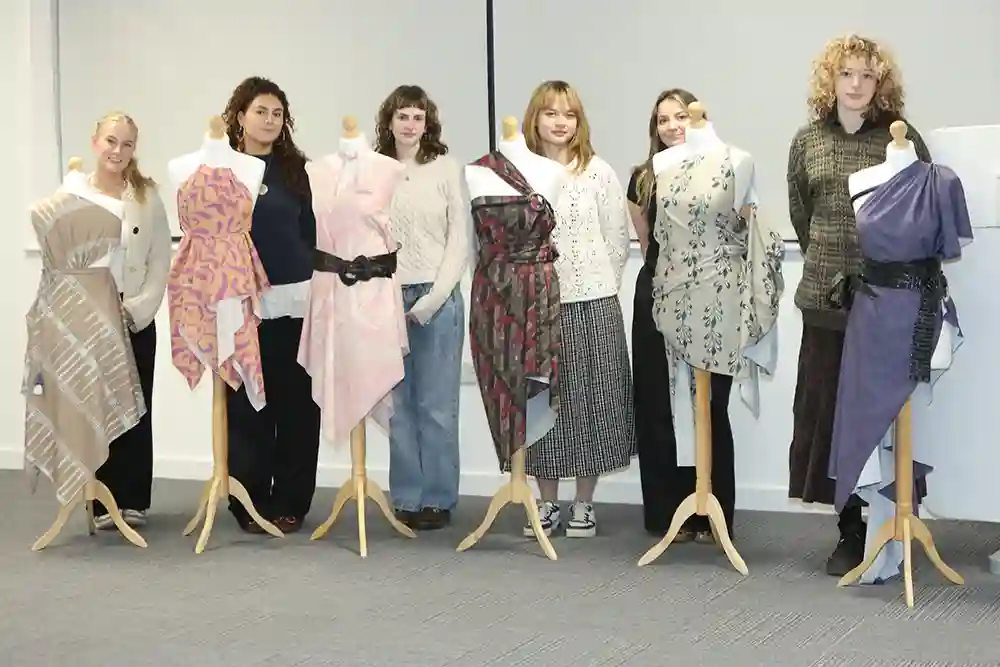
The event combined practical workshops with discussions on business models, marketing, and sustainability. Students experimented with dye-sublimation, direct-to-garment (DTG) and direct-to-film (DTF) printing, techniques often touted as enablers of fast, flexible, and lower-impact production. A new “no-sew” dress workshop illustrated the possibilities of on-demand manufacturing, while a Bring-Your-Own-Garment session demonstrated how DTF printing can support upcycling and small-batch commercialisation.

Digital textile printing, while still a niche compared with conventional rotary or screen processes, is expanding rapidly as brands face pressure to reduce waste, lower inventory risk, and transition to circular models. Events like Epson’s Academy hint at a broader trend: manufacturers and designers who master on-demand, data-driven printing may be better positioned in markets increasingly shaped by environmental regulations, shorter product cycles, and customisation.
As the UK and EU move forward with extended producer responsibility and digital product passport requirements, the skills taught at such academies are likely to become more valuable. The challenge for firms—and universities—will be scaling these capabilities beyond prototypes and workshops into commercially viable, resource-efficient production systems. Epson’s initiative suggests a model: align education with emerging technical realities, and invest early in the workforce that will build the next chapter of sustainable textiles.
