

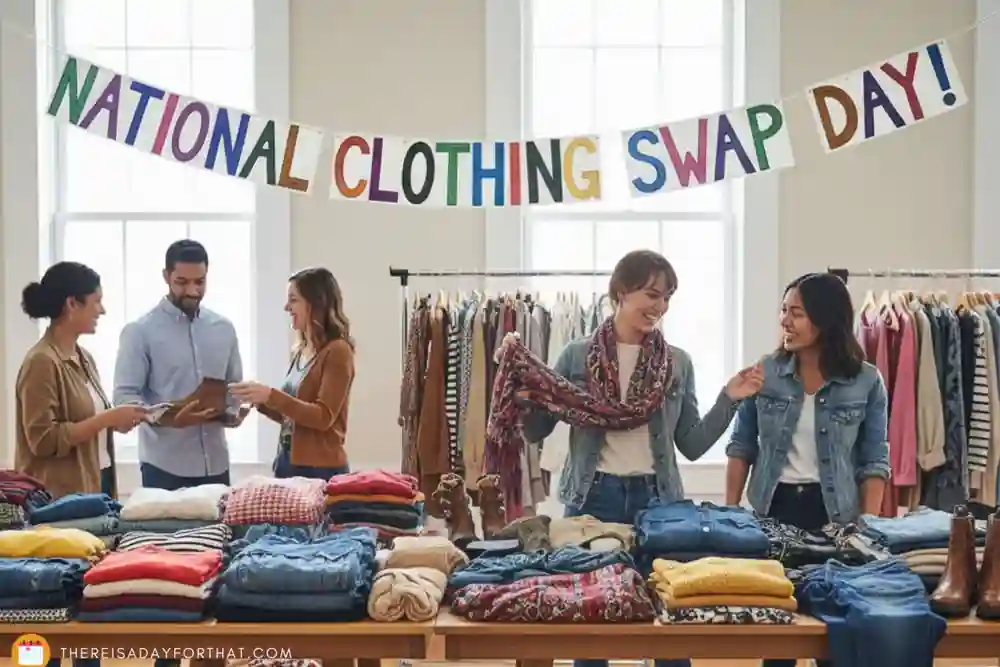
The grassroots initiative reflects a growing shift toward reuse culture and a pushback against holiday-season overconsumption.
America’s first-ever National Clothing Swap Day took place on Saturday, drawing crowds in cities from Oakland to Boston as participants exchanged hundreds of garments—and avoided the financial and environmental costs of buying new.
The premise is deliberately simple: bring clothing you no longer wear, and swap it for something “new-to-you.” Events unfolded across Oakland, Chicago, Minneapolis, Portland, Scranton, Seattle and other cities, with many more informal swaps taking place among friends and neighbours.
Organisers say the goal is twofold: extend the life of garments while offering a joyful, stress-free alternative to holiday shopping. Early turnout suggests rising enthusiasm for low-waste community events, especially during a season defined by pressure to buy.
The initiative will become an annual tradition—and organisers hope next year’s event will be even larger.
Clothing swaps are part of a broader cultural shift. Repair cafés, tool libraries and community sharing networks are gaining traction as Americans seek relief from both high living costs and the environmental toll of fast fashion. Swapping slows the flow of textiles into landfill, reduces demand for new production and encourages more mindful consumption.
With most households owning far more clothing than they regularly use, swap events highlight an underappreciated truth: abundance already exists—we just need better systems to circulate it.
Organisers encourage individuals and communities to hold their own swaps year-round and to incorporate reuse into everyday life. As 2026 approaches, the campaign’s call to action is clear: replace the buy-discard cycle with habits that prioritise swapping, mending, borrowing and sharing. If the momentum behind National Clothing Swap Day continues, reuse culture may become a defining feature of America’s move toward lower-waste living.
