

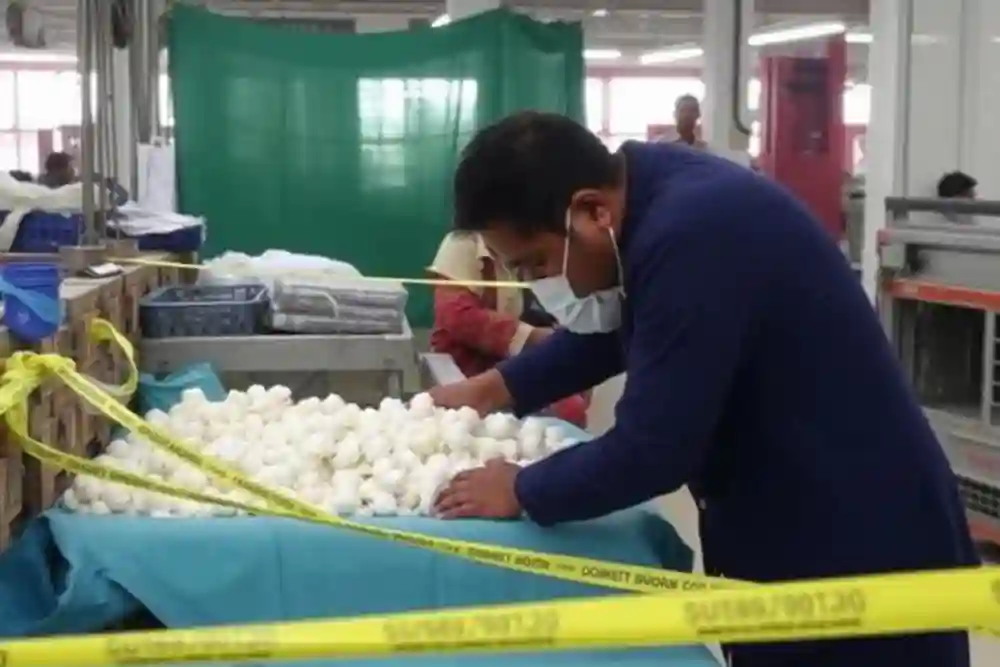
A property dispute has escalated into a systemic shock for pricing, employment and industry confidence.
The sudden sealing of the Karachi Cotton Association (KCA) building on 12 December 2025 by the Evacuee Property Trust Board, with assistance from the Federal Investigation Agency, has triggered one of the most disruptive episodes in Pakistan’s cotton trade in decades.
More than 320 registered cotton brokers and tenants have been locked out of their offices, putting an estimated 5,000 livelihoods at risk and causing daily losses worth millions of rupees. The immediate casualty has been market infrastructure: for the first time in its 52-year history, the KCA has been unable to issue the daily Cotton Spot Rate—a benchmark relied upon by traders, textile mills, bankers and insurers nationwide.
A pricing vacuum at the heart of the market
According to Sajid Mahmood of the Central Cotton Research Institute, the spot rate has been absent for more than three weeks, creating uncertainty across domestic and export contracts. Without a transparent reference price, risk premiums rise, financing tightens and transactions slow—precisely when Pakistan’s textile sector is already under severe stress.
Conflicting ownership claims
The legal dispute has widened. Karachi Metropolitan Corporation Mayor Murtaza Wahab has publicly asserted that the building belongs to the KMC, claiming ownership since 1936 and arguing that KCA’s lease was valid until 2081.
The FIA rejects this, stating that KCA’s occupation and lease documents appear fraudulent and that the action follows Supreme Court of Pakistan orders from November 2021 directing the vacation of ETPB properties. Negotiations continue, but the building remains sealed.
Structural issues run deeper
The crisis has exposed deeper weaknesses. Data from the Pakistan Cotton Ginners Association shows 5.43 million bales recorded by end-December 2025—virtually unchanged year-on-year—against annual textile demand of ~16 million bales. The shortfall forces ~5 million bales of imports annually, draining foreign exchange.
Meanwhile, ginners face raids by the Federal Board of Revenue, while the All Pakistan Textile Mills Association has called for video surveillance at ginning factories to curb unregistered transactions—estimated at 2–3 million bales per year.
The bigger risk
What began as a property enforcement action has morphed into a systemic market failure: suspended price discovery, frozen offices, rising unemployment and eroding trust. Cotton is the raw-material backbone of Pakistan’s textile economy; disrupting its institutional core sends shockwaves far beyond Karachi.
The immediate demand from brokers and tenants is straightforward: unseal the building, restore the Cotton Spot Rate, and allow business to resume while legal questions are resolved. Longer term, the episode underscores a harder truth repeatedly stressed by industry and researchers alike: without stable institutions, transparent markets and sustained investment in cotton R&D, Pakistan’s textile value chain cannot recover competitiveness.
In cotton-producing nations such as China, the US, Australia and India, cotton is treated as a strategic crop. Pakistan’s current crisis shows what happens when governance disputes collide with already-fragile fundamentals—and why resolving both is now an economic imperative, not a procedural detail.
