

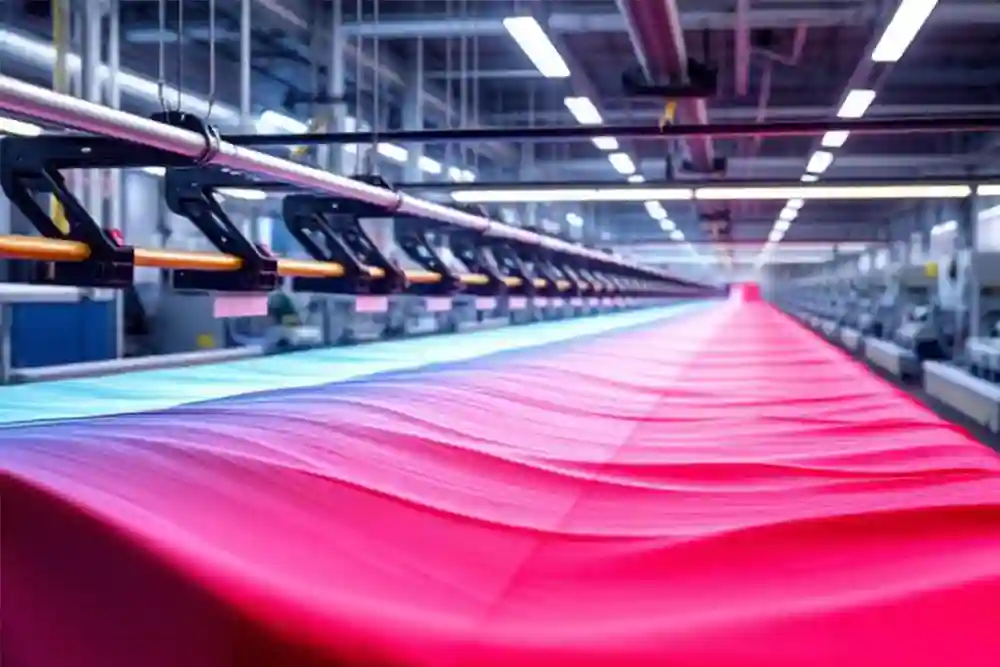
Artificial intelligence has crossed a decisive threshold in global textile manufacturing. Between 2022 and 2025, AI has moved from pilot projects to embedded, mission-critical infrastructure, reshaping how mills manage quality, machines, processes, and production planning. What was once an efficiency experiment is now a competitive necessity amid rising costs, sustainability mandates, and volatile demand.
Key AI Applications Transforming Textile Mills
- 100% Inline Fabric Inspection via AI Vision
- Deep-learning vision systems now inspect fabric continuously and in real time
- Detect defects such as:
- Holes, thick/thin places
- Yarn floats
- Contamination
- Systems learn and improve over time, outperforming rule-based or manual inspection
- Early detection (pre-dyeing/finishing) has delivered 8–10% material savings
- Live quality dashboards link defects directly to upstream process parameters
Impact: Manual inspection stages eliminated; faster root-cause analysis; less waste.
- AI-Driven Bow, Skew, and Distortion Control
- Real-time sensor data feeds predictive AI models
- Distortion is anticipated before it becomes visible
- Automatic or recommended adjustments:
- Fabric tension
- Temperature balancing
- Mills report:
- Fewer reprocessing cycles
- Improved dimensional stability
- Lower energy and chemical consumption
Impact: Reduced claims, lower rework, faster stabilization after style changes.
- Predictive Machine Health & Maintenance
- Machine-learning models analyse:
- Vibration
- Temperature
- Power consumption
- Applied to spinning frames, dryers, sizing machines, winders
- Leading mills report:
- >20% reduction in unplanned downtime
- Lower maintenance costs
- Extended asset life
- Failures are predicted days or weeks in advance
Impact: Shift from reactive to condition-based maintenance.
- Intelligent, Learning-Based Yarn Clearing
- AI replaces static threshold logic
- Clearing systems adapt to:
- Fibre type
- Blends and recycled yarns
- Operating conditions
- False cuts decline, while true faults are detected more reliably
- Downstream benefits:
- Cleaner yarn packages
- Fewer loom stops
- Improved fabric appearance
Impact: Waste reduction and more stable weaving performance.
- Digital Twins for Production Planning
- Virtual replicas of production lines simulate:
- Scheduling changes
- Machine substitutions
- Maintenance timing
- AI evaluates scenarios based on:
- Throughput
- Energy use
- Delivery timelines
- Proven benefits:
- Shorter changeovers
- Higher capacity utilisation
- Better bottleneck identification
- Particularly valuable during demand swings and labour shortages
Impact: Planning becomes predictive rather than reactive.
Industry-Wide Outcomes
Across inspection, control, maintenance, yarn quality, and planning, AI delivers consistent results:
- Higher quality
- Lower waste
- Reduced energy and chemical use
- Faster response to operational issues
Analysts estimate 2–4% operating margin improvement in large integrated mills through AI-driven efficiency alone.
Outlook
As sensor costs, computing power, and AI platforms continue to fall, adoption is spreading rapidly from large groups to mid-sized manufacturers. AI is no longer optional or experimental—it is becoming part of the standard technology stack of textile manufacturing.
Bottom line:
Mills that integrate AI across inspection, process control, maintenance, and planning are positioning themselves for resilience, compliance, and long-term competitiveness in an increasingly data-driven global textile industry.
