

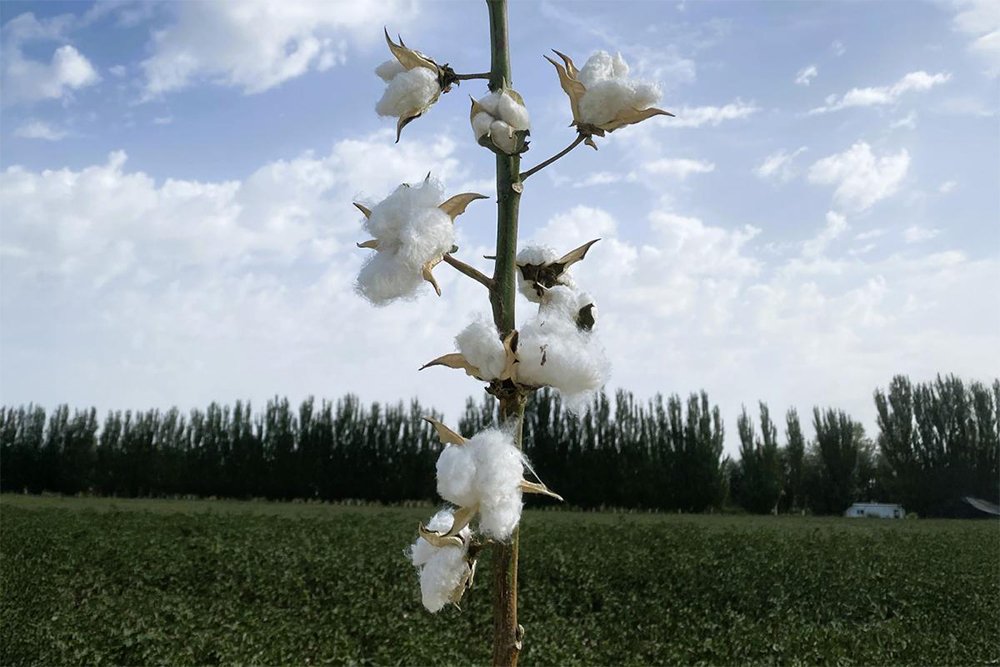
In high-end cotton, genetics is a supply-chain strategy: yield gains and fibre quality reduce the cost of consistency.
Esquel Group says its Xinjiang R&D centre has secured official approval for two new extra-long staple (ELS) “Sea Island” cotton varieties—Yuan Loong 37 and Yuan Loong 42—each with registration numbers and Plant Variety Rights certificates. The additions take Esquel’s approved ELS portfolio to eight varieties, spanning earlier releases (including Xinhai 33/50/55/63 and Yuan Loong 17/30) plus the two new entries.
What changed
The company frames the new varieties as agronomically sturdier—robust plant structure, broad adaptability, disease resistance and harvest performance—while targeting higher output without sacrificing fibre parameters.
- Yuan Loong 37: reported >13% yield increase in production tests, with commercial cultivation delivering “premium” yield and fibre quality.
- Yuan Loong 42: reported >18% yield increase, and an average fibre length of 37.6mm, with strong uniformity and strength suited to high-end spinning.
Why it matters
ELS cotton is expensive partly because it is hard to grow consistently at scale. If Esquel can lift yields while keeping length and uniformity within tight tolerances, it lowers the hidden costs of premium yarn: blending losses, variability risk, and the need to “buy safety” through extra inventory.
What happens next
For a vertically integrated group, better seed is not just agronomy—it is capacity planning. More reliable premium fibre underpins high-count combed yarns and “advanced functional fabrics”, and gives Esquel leverage in a market where brands want traceability and consistency—without paying for surprises.
