

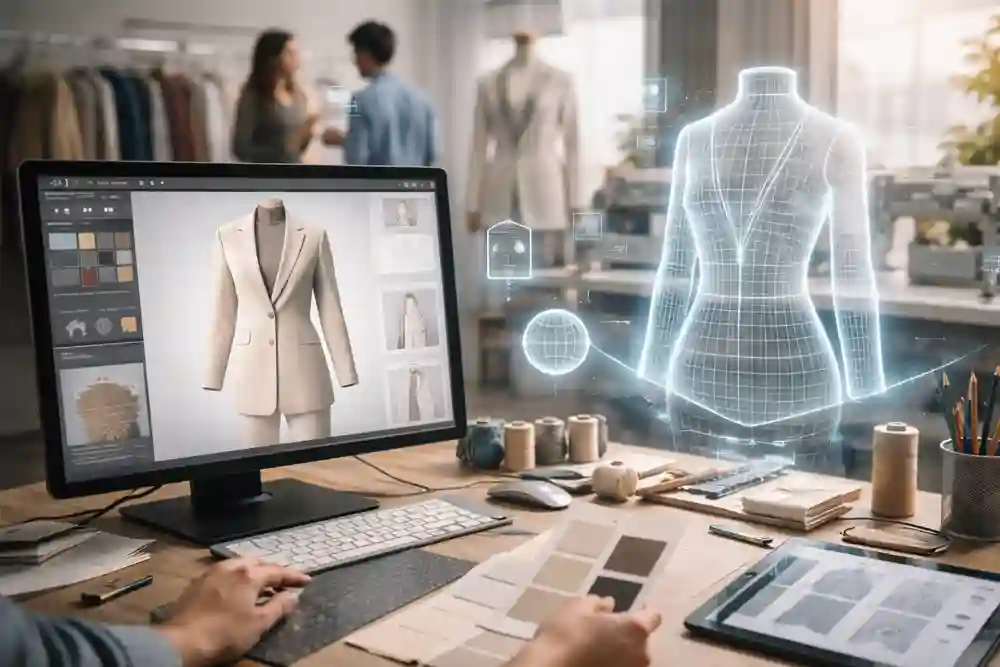
At PI Apparel in London, Shima Seiki is making the case that better digital workflows can cut waste, shorten lead times and link design more directly to production.
Shima Seiki will showcase its digital product-creation tools at the PI Apparel Fashion Technology Show Europe 2026 in London, positioning software—not just machinery—as a lever for efficiency and sustainability in fashion.
What it is showing: design, simulation and production in one workflow
At the centre of the presentation is APEXFiz, Shima Seiki’s subscription-based design platform. The software supports planning, design, textile simulation and 3D virtual sampling, allowing brands to create realistic digital garments using scanned data from actual yarns.
The aim is to reduce reliance on physical prototypes. Once a design is approved, the system can convert knitting data directly into machine data, creating a more seamless path from concept to manufacturing.
Why it matters: fewer samples, lower waste
For apparel companies, product development remains one of the industry’s most wasteful and time-consuming stages. Repeated physical sampling consumes material, labour and time, especially in categories with frequent revisions and short selling windows.
By replacing part of that process with accurate digital simulation, Shima Seiki is targeting a familiar industry problem: too much manual iteration, too little integration.
What comes next: software becomes strategic infrastructure
APEXFiz also supports weaving, circular knitting, embroidery and towel applications, suggesting a broader ambition beyond knitwear. As brands push for faster development and lower waste, digital design platforms are becoming less of an add-on and more of a core operating system for future-ready fashion businesses.
