

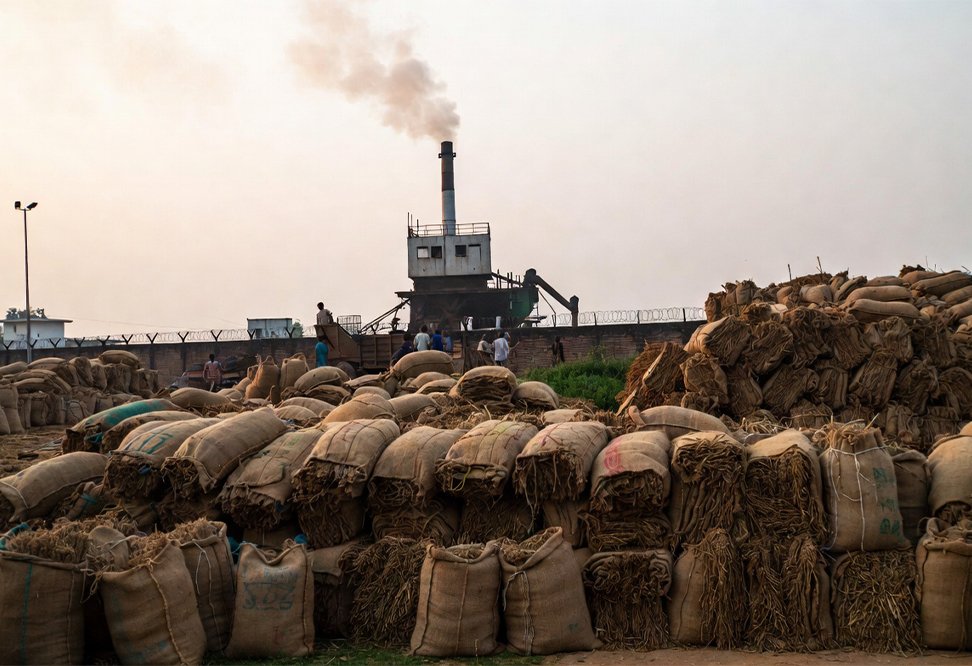
The government’s ambition is to move jute beyond its traditional export base by linking better seeds, research, private management and higher-value product development.
Bangladesh has set a target to transform its jute sector into a $5 billion to $7 billion export-oriented industry, up from current annual export earnings of about $1 billion, Commerce, Industries, Textiles and Jute Minister Khandakar Abdul Muktadir said at the inauguration of the Diversified Jute Products Fair 2026 in Dhaka on May 19.
From legacy fibre to growth sector
The target reflects renewed policy interest in jute as Bangladesh looks to diversify beyond readymade garments and capture demand for biodegradable, plastic-alternative materials. Muktadir said the sector’s expansion will require modern technology, stronger research, improved seed production, product diversification and wider private-sector participation.
The contrast with the past remains stark. Jute and jute goods accounted for nearly 90% of Bangladesh’s export earnings in FY1972-73, but despite total national exports now reaching about $50 billion to $55 billion, jute’s contribution has remained close to $1 billion.
Seeds, design and private management
A key weakness is input quality. Bangladesh still imports around 6,000 tonnes of jute seed annually, making seed self-sufficiency and varietal improvement central to any productivity plan. The government is also exploring joint ventures with leading Chinese universities to improve jute productivity, develop advanced seed varieties and design globally competitive products.
The reform agenda also includes a gradual shift of state-owned jute mills toward private management systems. The stated aim is to improve operational efficiency, modernisation and commercial viability, areas where legacy mills have struggled for years.
Diversified products take centre stage
The five-day fair, being held at the Jute Diversification Promotion Centre in Farmgate, Dhaka, will run until May 23, from 10am to 9pm daily. It is intended to connect entrepreneurs, producers and buyers around higher-value jute applications rather than traditional sacks and packaging alone.
The next test will be execution. Bangladesh’s jute opportunity is real, but reaching $7 billion will require more than nostalgia for the “golden fibre”: it will depend on reliable seeds, export-grade design, modern mills, quality consistency and sustained market access.
