

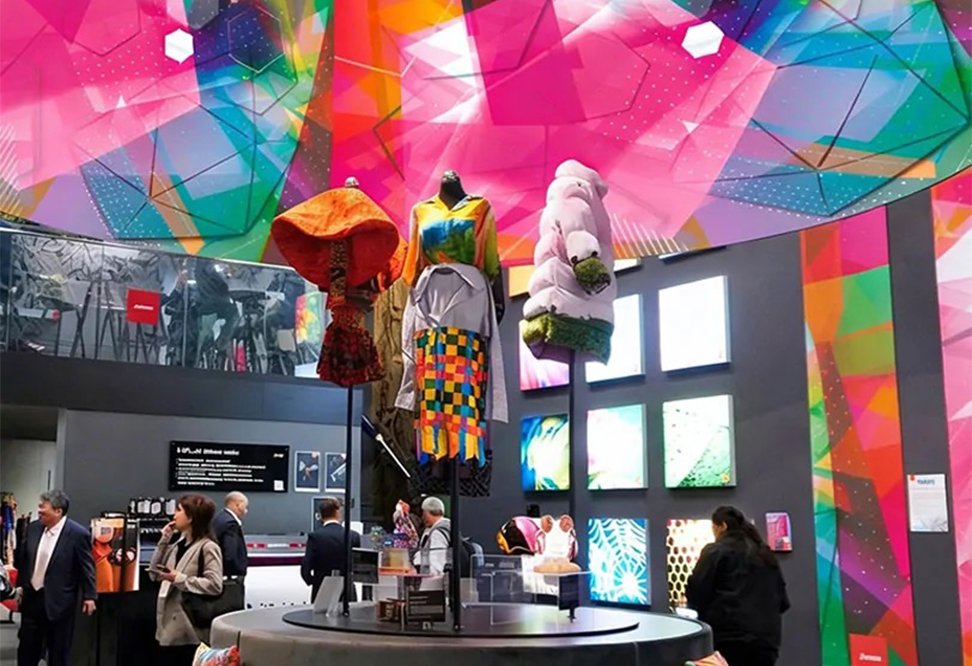
The company’s Barcelona showcase shifts the focus from machines alone to complete workflows for diversification, UV production and scalable DTF output.
Mimaki Europe is using FESPA Global Print Expo 2026 in Barcelona to position digital printing as a route to higher-value applications and broader business models for print service providers. Under the theme “Print Different – Powering Possibilities,” the company has built its stand around dedicated application zones covering hybrid UV, sign graphics, textile, personalisation and high-volume production at Hall 3, Booth D95.
UV moves into the mainstream
A central launch is the UJ330H-160 hybrid UV printer, shown internationally as a platform for both roll-to-roll and rigid media. The system is aimed at businesses wanting to reduce outsourcing, save production space and move between signage, interior décor, display graphics, packaging and point-of-sale work without adding multiple machines.
The printer uses Mimaki’s 330 Series architecture and supports fine ink droplets down to 4 picolitres, targeting sharper output, smoother gradients and consistent production across different substrates. Its hybrid configuration is designed to handle both flexible and rigid media, making it relevant for companies seeking diversification without a major workflow reset.
Accessible roll-to-roll UV
Mimaki is also presenting the UJV200 Series, making its international tradeshow debut at FESPA. The range is positioned as an accessible UV roll-to-roll option for sign and graphics producers, combining UV’s instant curing and media flexibility with white and clear ink effects for more value-added applications.
For printers under margin pressure, this reflects a wider market shift: UV technology is no longer limited to premium or specialist production. It is becoming a practical tool for faster turnaround, broader substrate compatibility and differentiated visual effects.
DTF enters its scale-up phase
Mimaki is also previewing a new DTF concept model based on its 330 platform, signalling the company’s direction for more stable, scalable direct-to-film production. The emphasis is shifting from entry-level adoption toward repeatability, white-ink stability, productivity and consistent colour in higher-volume workflows.
The strategic message at FESPA is clear: print businesses are no longer buying only output devices. They are investing in connected production systems that combine hardware, software, workflow control and application expertise
