

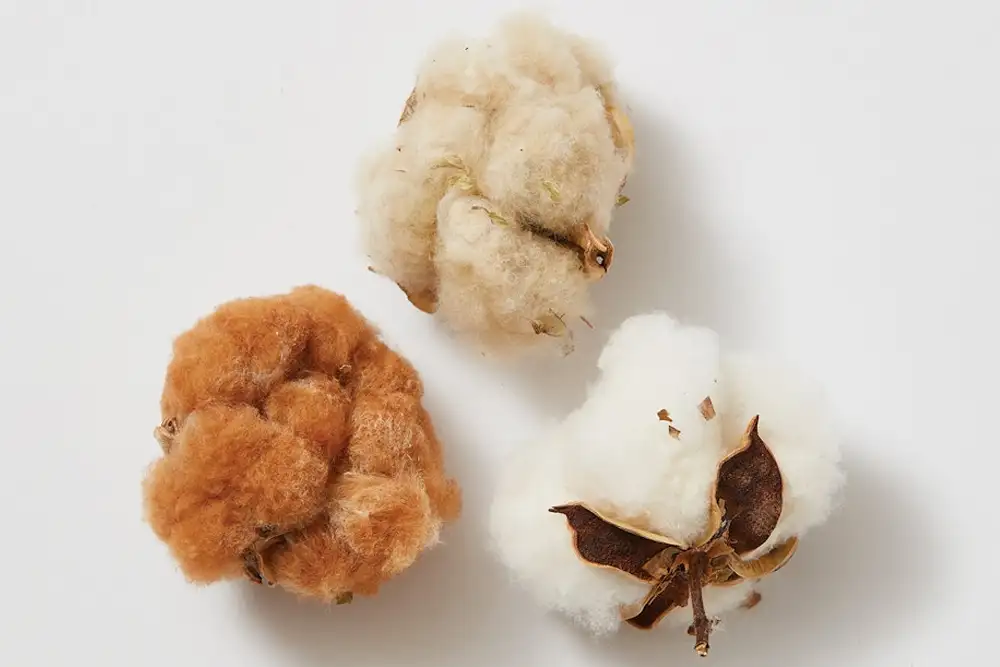
If commercialized, cotton with built-in color could shift part of textile sustainability from dyehouses back to the crop itself.
Researchers at the University of Georgia and Clemson University are developing cotton varieties that can produce color directly in the fiber, potentially reducing the textile industry’s reliance on water-, energy- and chemical-intensive dyeing. The project is supported by an $11 million grant from the Bezos Earth Fund and combines advanced breeding, genomics, gene editing and artificial intelligence.
Color moves upstream
The central idea is simple but technically demanding: instead of growing white cotton and dyeing it after spinning, weaving or knitting, researchers want the cotton plant to form pigment as the fiber develops. Clemson’s Chris Saski is leading work on engineered pigment traits, while UGA cotton breeder Peng Chee is identifying genetic traits linked to drought tolerance, disease resistance and lower input requirements.
The team has identified heirloom cotton varieties that naturally produce subtle reds, greens and browns. By working on the biological pathways behind those pigments, researchers hope to expand both the range and intensity of colors available for future textile use.
Dyehouse implications
The potential impact is commercially significant. Saski estimates that successful naturally colored cotton could reduce water use linked to textile dyeing by at least 70%, cut dye-related chemical inputs and wastewater by 80%, and reduce dyeing energy demand by about 50%.
For mills and brands, this would not eliminate finishing, quality control or shade management. But it could reduce one of the most resource-heavy stages of cotton textile production, especially for basic colors and high-volume apparel categories.
AI speeds the breeding cycle
The project will use AI, advanced imaging and DNA-based prediction models to screen thousands of cotton plants and identify promising genetic combinations faster than traditional breeding allows. UGA’s role is to test whether these traits perform under real field conditions, including weather variation, soil differences, pests and farm management pressures.
The project is not aimed at a single “miracle variety.” Its wider ambition is a breeding pipeline for cotton lines suited to different regions and market needs. The next test will be whether built-in color can meet commercial requirements for shade consistency, fiber quality, yield, processing performance and consumer acceptance.
