

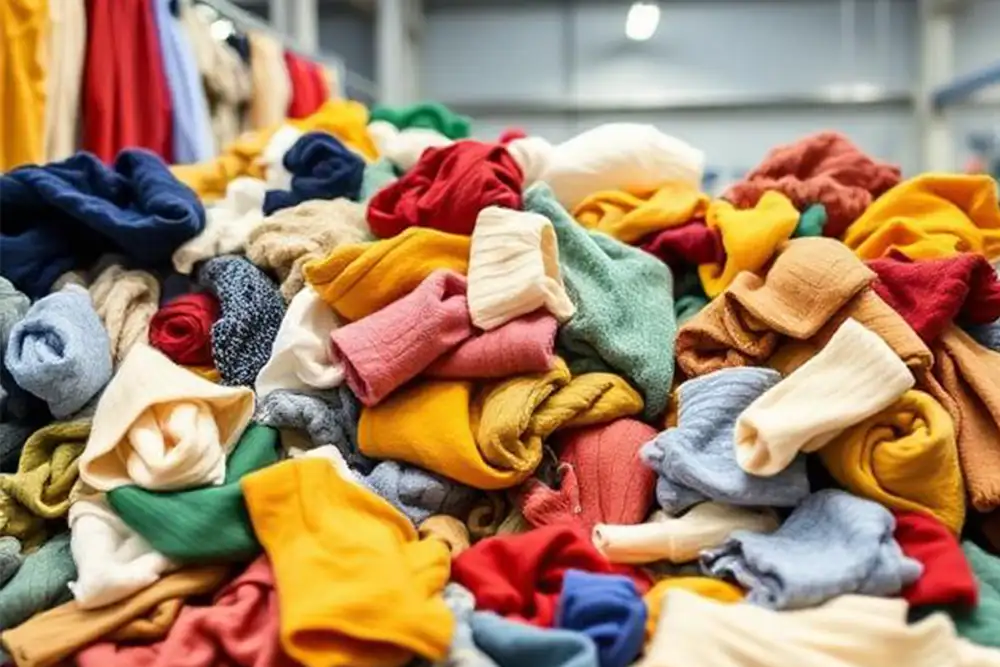
The breakthrough is not recycling itself, but better identification of fabric structure and fiber quality before garments are mechanically opened.
Researchers at SINTEF and Norsk Tekstilgjenvinning are testing whether high-resolution imaging and artificial intelligence can make textile-waste sorting precise enough to support higher-value textile-to-textile recycling. The pilot addresses one of circular fashion’s hardest operational barriers: mixed post-consumer textile waste is too variable for consistent fiber recovery.
Sorting is the bottleneck
A tonne of textile waste can contain roughly 2,000 garments, spanning cotton, polyester, wool, blends, household textiles, upholstery and carpets. For recyclers, that variation matters. Mechanical recycling depends heavily on the incoming material: fiber composition, weave or knit structure, fabric condition and contamination all influence the quality of recovered fiber.
SINTEF’s pilot used a camera system with extremely high resolution, close to microscopic scale, to examine textile surfaces. The goal is to combine these images with AI so sorting systems can identify fabric type, structure and fiber quality more accurately than conventional visual or manual methods.
Higher-grade waste, higher-grade output
Today, much recycled textile material is downcycled into rags, mats, insulation or other lower-value uses. More accurate sorting could allow recyclers to adjust mechanical opening and fiber-recovery equipment to suit each material stream. That would improve recycled fiber quality and make it more suitable for spinning mills producing yarn for new garments.
The commercial logic is clear: spinning mills will pay more for consistent, usable recycled fiber than for poorly sorted, degraded feedstock. Better sorting could therefore improve both recycling economics and circular-material availability.
Regulation is forcing the issue
The timing is important. Europe is moving from voluntary circularity claims toward regulated textile-waste management, with separate collection requirements and producer responsibility schemes increasing pressure on brands, retailers and municipalities to build real recycling capacity.
NTG opened Norway’s first textile recycling plant in Sandefjord in 2024 and received 650 tonnes for recycling last year. The company says capacity could eventually reach 30,000 tonnes annually if investment follows.
The next test is scale. SINTEF says more experiments with larger textile volumes are needed before AI-enabled sorting can move from promising pilot to industrial infrastructure.
