

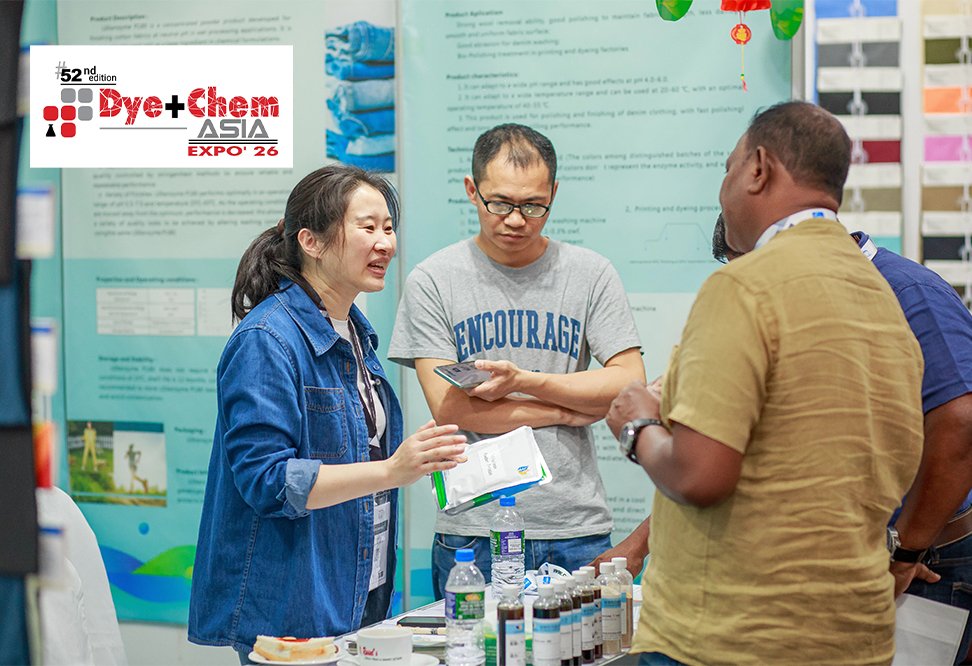
The Bangkok event underlined a clear market shift: dyeing and finishing suppliers are now expected to deliver compliance, water savings and process efficiency, not only colour.
DyeChem Asia International Expo 2026 concluded in Bangkok with a strong focus on green textile chemistry, highlighting the rising importance of sustainable dyes, auxiliaries and specialty chemicals across Asia’s textile manufacturing base. The 52nd edition of the exhibition was held from June 3–5 at the IMPACT Exhibition Center and brought together chemical suppliers, textile processors, machinery stakeholders and sourcing professionals.
Chemistry faces a new buyer test
For dyehouses and finishing mills, the sustainability pressure is becoming operational rather than promotional. Global brands are asking for lower water consumption, restricted-substance compliance, cleaner effluent, traceable inputs and process documentation. This makes chemical selection a strategic production decision, especially for export-oriented mills in Bangladesh, India, Vietnam, Indonesia, Sri Lanka, Cambodia and Thailand.
The exhibition’s emphasis on eco-compliant dyes, water-saving technologies, advanced auxiliaries and functional finishes reflected this shift. Suppliers are increasingly positioning chemistry as a route to lower reprocessing, better shade consistency, reduced effluent load and stronger buyer confidence.
Bangkok as a regional platform
The choice of Bangkok strengthened the event’s role as a bridge between South Asia and ASEAN. Thailand’s logistics position, regional connectivity and proximity to major apparel-producing countries made the exhibition a useful platform for suppliers seeking distribution partners, market entry and cross-border business development.
The event also benefited from its connection with wider textile sourcing and technology exhibitions, creating a more integrated marketplace for chemicals, machinery, yarns, fabrics and apparel sourcing.
Green chemistry becomes commercial
The key industry message is that green chemistry is moving from a niche claim to a competitive requirement. Mills are no longer evaluating dyes and chemicals only on price and shade performance. They are also assessing energy demand, liquor ratio, treatment cost, certification compatibility, wastewater impact and regulatory risk.
The next signal to watch will be adoption at mill level. If buyers continue tightening compliance and environmental requirements, chemical suppliers with proven low-impact formulations, technical service and documentation support will gain ground over commodity suppliers competing mainly on cost.
