

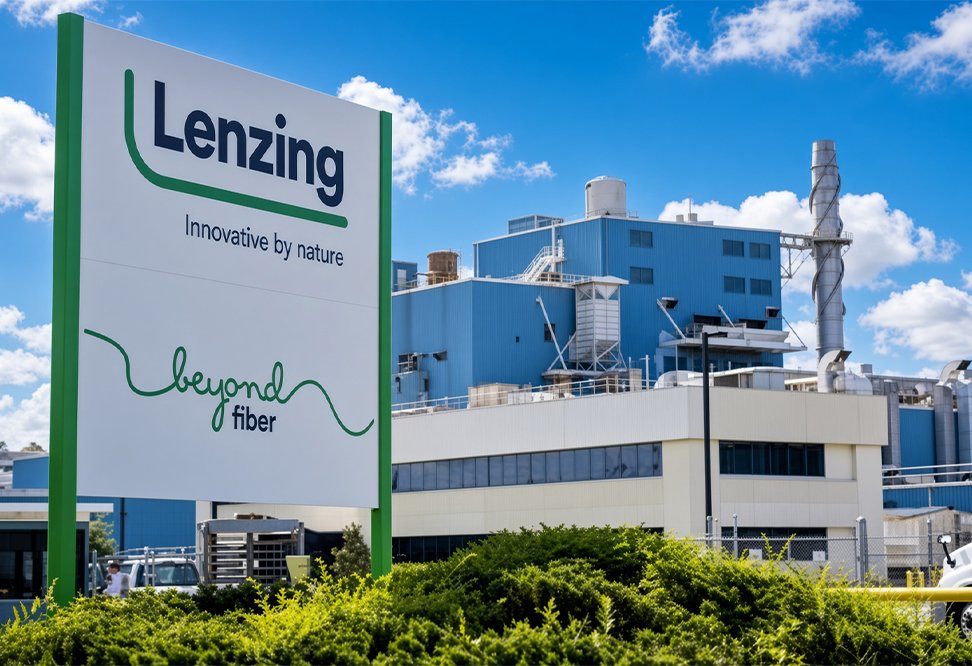
Heiligenkreuz will stop fibre production by end-2026 and Grimsby by end-2027 as Lenzing concentrates capital on larger core sites and higher-margin applications.
Lenzing Group will phase out fibre production at two historically important TENCEL lyocell sites as part of a wider restructuring of its man-made cellulosic fibre business. Production at Heiligenkreuz, Austria, will end by December 2026, followed by Grimsby, UK, by the end of 2027. Lenzing is evaluating potential divestments or other alternatives before implementing complete wind-downs.
Two pioneering sites leave the network
Heiligenkreuz has produced lyocell since 1997 and became the first facility to manufacture more than one million tonnes cumulatively. Grimsby, opened under Courtaulds Fibres in 1998, is closely associated with the early commercial development of TENCEL-branded lyocell. Their closure therefore represents a significant consolidation of Europe’s cellulosic-fibre manufacturing footprint.
Lenzing says production will be redistributed across its core manufacturing network without compromising customer supply. The company continues to prioritise premium textile fibres marketed under TENCEL, LENZING ECOVERO and VEOCEL, while gradually reducing exposure to low-margin standard textile fibres.
Nonwovens move up the investment agenda
Under its “Grow Nonwovens, Reset Textiles” strategy, Lenzing has committed €23 million since November 2025 to expand nonwoven-fibre capacity at its main Austrian site, particularly for hygiene applications. It is also converting its Mobile, Alabama operation into a specialty nonwovens facility while pursuing additional TENCEL Modal capacity in Austria and China.
The restructuring targets €120 million of savings against the 2025 cost base by the end of 2027. Lenzing expects up to €150 million in non-cash asset impairments and as much as €40 million in workforce-related restructuring provisions during 2026.
Supply shifts rather than disappears
For spinners, fabric mills and brands, the development does not signal Lenzing’s retreat from lyocell. It signals a move away from smaller, higher-cost assets towards concentrated production and higher-value fibres. First-half revenue fell 5.5% to €1.27 billion, while net profit more than doubled to €35.6 million as management prioritised profitability over volume.
The next test will be whether Lenzing can transfer production smoothly while preserving fibre specifications, lead times and availability for customers accustomed to European-origin supply.
