

Fraunhofer’s project with German home-textile producer frottana shows how AI can replace spreadsheet-led demand planning with a more disciplined, reviewable production signal.
Textile manufacturers often possess years of sales and production records but still plan demand through spreadsheets, manual calculations and the judgement of experienced employees. That approach becomes fragile when product portfolios expand, seasonal peaks intensify and key planning knowledge leaves with staff.
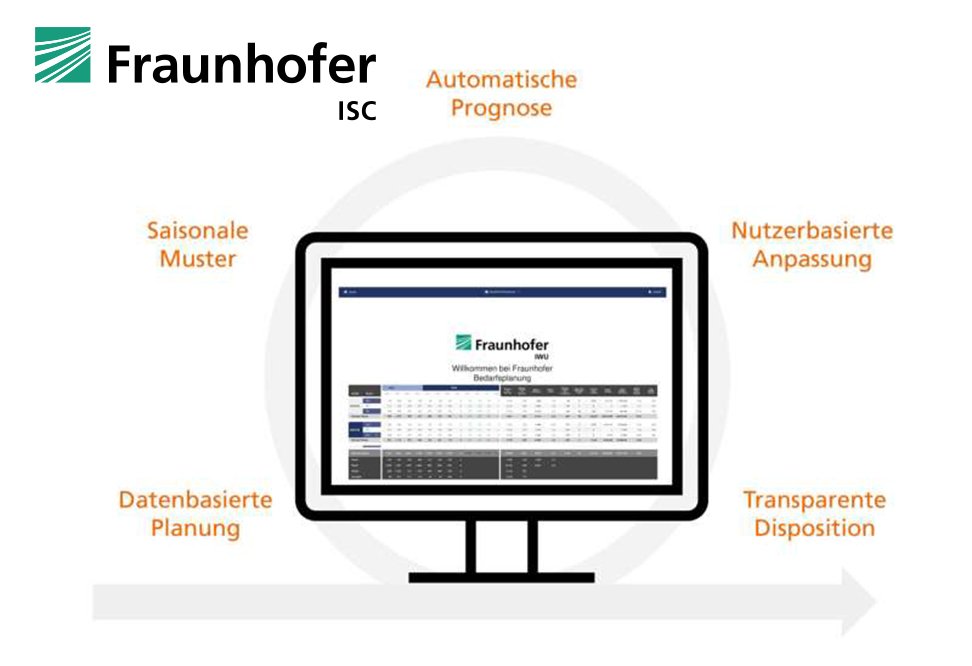
A new project led by Fraunhofer IWU for frottana Textil, producer of the MÖVE home-textile brand, illustrates how artificial intelligence can make demand planning more systematic. Working with Logsol, the team developed a forecasting tool that analyses historical monthly sales, identifies seasonality and trend patterns, and produces a data-based input for ordering and scheduling decisions.
A case built on limited data
The model used four years of historical sales data and neural-network methods to forecast monthly demand. According to the project team, it explained 82.7% of sales variation. For a product averaging 340 units sold per month, the typical difference between forecast and actual sales was around 38 units, or roughly 9%.
Those results should be read carefully. The system did not differentiate sales channels, regions, promotional activity or unusual COVID-related effects. It is therefore a factory-specific case result, not a universal benchmark for textile demand forecasting.
However, that limitation also makes the result commercially interesting. If a model can offer useful planning support from relatively limited and imperfect data, mills and home-textile businesses may not need to wait for a fully mature enterprise-data architecture before starting.
Forecasting must feed operations
The immediate benefit is not AI for its own sake. Better demand signals can improve yarn and fabric ordering, production sequencing, batch sizing, labour allocation and inventory control. For seasonal categories such as towels, bedding and home textiles, it can also reduce the costly cycle of overproduction before peaks and reactive capacity adjustments afterwards.
Fraunhofer’s next step is integration with production planning. Combined with material-flow simulation, such tools could allow factories to test alternative production scenarios before changing live schedules.
Keep people in the loop
The strongest feature of the project is its human-in-the-loop design. Staff can review, adjust and enrich the model’s forecasts using commercial insight unavailable in past sales data, such as an upcoming promotion, a retailer commitment or a buyer’s revised order plan.
For textile companies, the implementation priority is simple: begin with clean historical demand data, define forecast accuracy by product family, capture planners’ overrides, and link the final forecast to operational decisions. The competitive advantage comes when prediction becomes a repeatable planning process—not a dashboard.
