

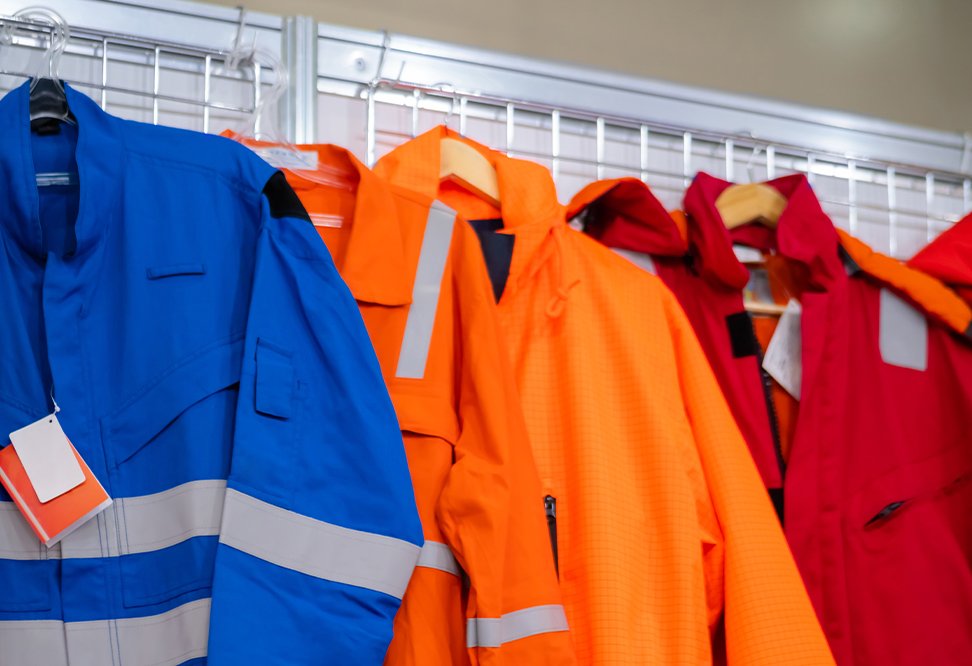
Demand for flame-, chemical- and biological-protective garments is rising as safety regulation, industrial expansion and advanced fibre technologies reshape the workwear market.
The global protective clothing market is projected to more than double from $11.5 billion in 2024 to $24 billion by 2035, according to Transparency Market Research. Its forecast implies a compound annual growth rate of 6.9% between 2025 and 2035.
The category covers garments designed to protect workers from thermal, chemical, biological, radiation and other occupational hazards. Major end-use markets include construction, manufacturing, oil and gas, mining, healthcare, pharmaceuticals, defence and firefighting.
Safety rules sustain demand
The market’s underlying driver is not discretionary fashion consumption but mandatory risk control. Employers in hazardous industries must provide clothing that meets application-specific requirements for flame resistance, chemical protection, abrasion resistance, biological containment and worker visibility.
North America accounted for 37.4% of global market revenue in 2024, making it the largest regional market in the study. Regulation, established industrial safety programmes and spending on emergency preparedness support demand, although procurement remains highly price-sensitive.
The United States, for example, awarded contracts worth up to $510 million in 2024 to expand domestic production of isolation gowns and replenish the Strategic National Stockpile. The programme also reflected a broader policy effort to reduce dependence on imported medical protective equipment.
Performance fibres lead
Aramid fibres and blends represented an estimated 34% of the market by material type in 2024. Their combination of heat resistance, flame protection, strength and relatively low weight makes them important in firefighting, military, oil and gas and heavy-industrial garments. Other material groups include polyamides, polyolefins, polybenzimidazole, treated cotton and laminated fabrics.
Product development is increasingly focused on multilayer barriers, breathable membranes, lightweight constructions, moisture management and sensor-enabled garments. However, suppliers must balance higher protection with comfort, durability, laundering performance and total lifecycle cost.
Opportunity for technical-textile producers
The forecast creates opportunities for fibre producers, coating and laminating companies, technical weavers, nonwoven manufacturers and specialist garment makers. Entry barriers remain higher than in commodity apparel because products require testing, certification, traceable materials and consistent manufacturing controls.
Market estimates vary significantly by research methodology: another recent forecast places the sector at $15.06 billion by 2030, with 5.48% annual growth from 2025. The direction is nevertheless consistent—protective apparel is expanding, but suppliers will compete on certified performance and reliability rather than price alone.
