

The New York investment expands industrial dye-sublimation capacity for high-resolution graphics, sportswear, décor and experiential textile applications.
Duggal Visual Solutions has installed North America’s first EFI Reggiani NEXT Plus in an eight-colour configuration at its New York production operation, strengthening its capacity for high-volume digital textile and dye-sublimation printing.
Announced on July 9, 2026, the investment is intended to improve colour reproduction, image resolution and production responsiveness as brands and visual-communications customers demand shorter delivery times and more customised output. The installed configuration adds light magenta and light black to the standard process colours, supporting smoother gradients, pastel shades and more precise colour matching.
Industrial output with finer detail
The NEXT Plus is a beltless industrial inkjet system designed for printing transfer paper and non-elastic fabrics. EFI specifies print widths of 1.8 metres and 3.4 metres, maximum resolution of 600 × 4,800 dpi and productivity of up to 375 square metres per hour on the wider configuration. The machine uses eight printheads and can operate with as many as eight colours.
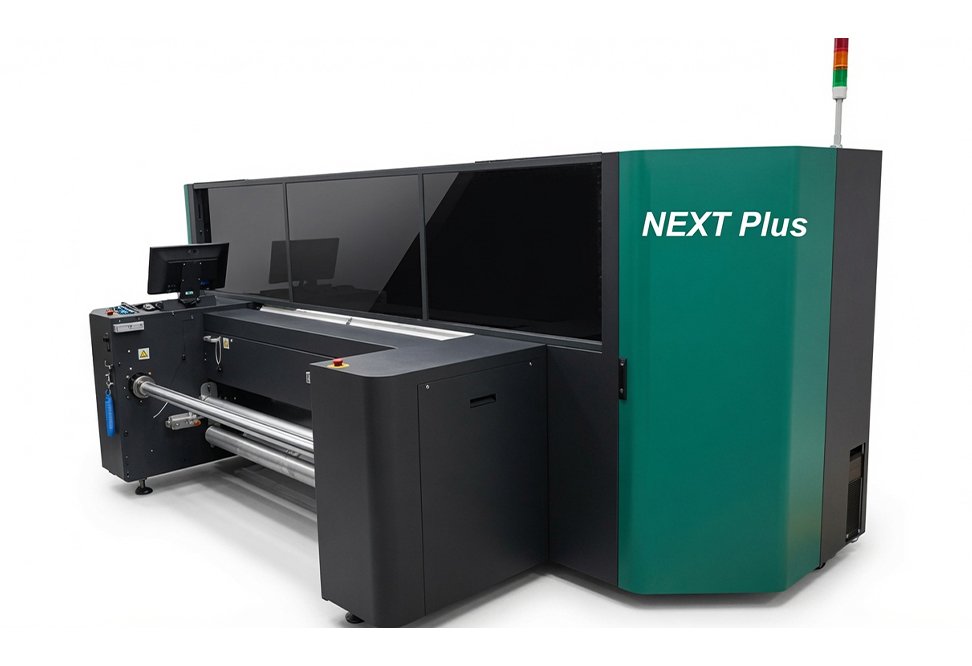
Duggal’s installation also uses a four-picolitre drop size, intended to produce sharper details and higher-definition imagery. Media-control features include a vacuum plate, automatic fabric-width sensing and mini-jumbo unwinding and rewinding, helping maintain tension and registration during high-speed production.
A wider application base
EFI positions the NEXT Plus for fashion, sportswear, home textiles and outdoor applications. Its ability to apply more ink at a given speed is particularly relevant to high-density sportswear graphics, while its expanded gamut supports demanding photographic, branded-environment and décor work. The printer can also connect with web-to-print systems and export operating data to external databases or enterprise-resource-planning platforms.
Sustainability claims need measurement
Both companies highlighted reduced energy consumption and lower environmental impact, but the announcement provided no quantified energy saving, emissions reduction or lifecycle comparison with Duggal’s existing equipment.
The commercial test will therefore be whether Duggal can translate the installation into shorter lead times, higher utilisation and measurable reductions in energy and waste per square metre printed. Its performance could influence further North American investment in industrial digital textile printing as customers shift towards shorter runs, rapid replenishment and more customised production.
