

YKK’s experimental trim shows how textile-to-textile recycling is moving beyond fabric into technically demanding garment components.
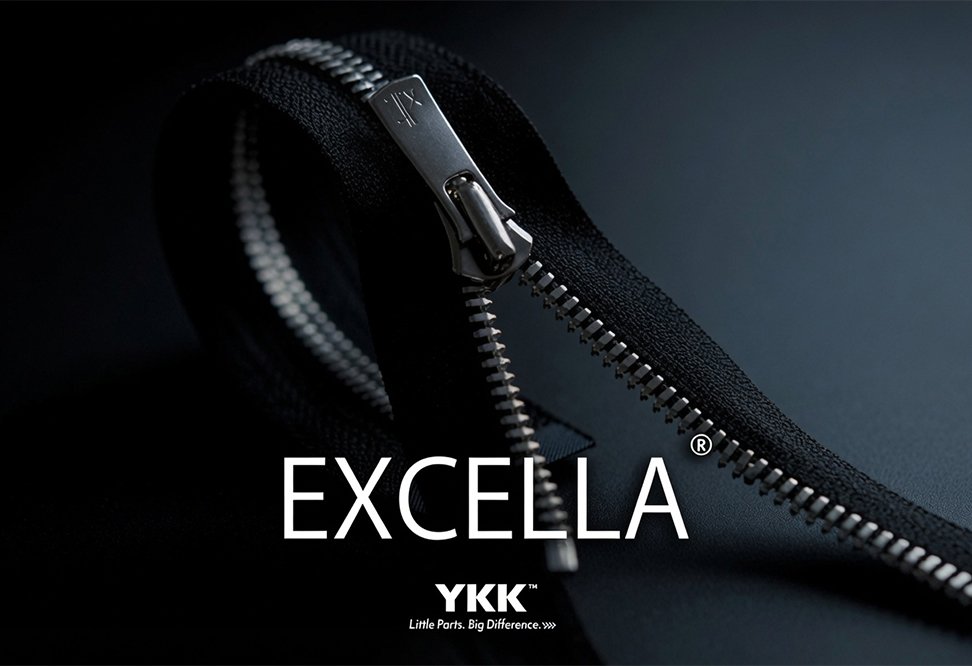
YKK has developed a concept version of its premium EXCELLA metal zipper using nonwoven tape partially derived from discarded clothing.
The prototype was created with Japanese designer Yuima Nakazato and Seiko Epson Corporation. It appeared in Nakazato’s “INFERNO” couture collection, unveiled in Paris on July 8, 2026. Epson converted used garments and other textile materials into nonwoven sheets through its proprietary Dry Fiber Technology, after which YKK adapted the material for zipper tape.
Engineering a nonwoven tape
Replacing conventional woven zipper tape with a regenerated nonwoven sheet required more than material substitution. YKK said standard attachment methods were difficult to apply, prompting development work around secure metal-element fixing, tape rigidity and selection of a compatible slider. Ease of operation also had to be improved before the concept could be incorporated into couture pieces.
Epson’s process mechanically defibrates, binds and forms fibrous materials without using water for defibration, although a small quantity is used to control system humidity. The technology can process plant-based, animal and man-made fibres, widening the potential textile-waste inputs for sheet materials.
Circularity reaches garment components
The project matters because trims remain a difficult part of circular product design. Zippers combine textile tape, metal or polymer elements and sliders, while durability and attachment performance must meet strict requirements. Recycled-content solutions must therefore preserve functionality while supporting future disassembly or recycling.
YKK has not disclosed the recycled-content percentage, production capacity, pricing or commercial-launch timetable for the EXCELLA concept. However, the company already has scale in lower-impact fasteners: its recycled-material NATULON zipper series reached 56% of global zipper sales by the end of fiscal 2025. YKK also reports that a 20-centimetre NATULON coil zipper produces about 19.6% fewer manufacturing-stage greenhouse-gas emissions than a comparable standard zipper.
The next test will be whether the nonwoven tape can move from couture experimentation to repeatable industrial production, with verified durability, wash performance, traceable recycled content and compatibility with garment-recycling systems.
