

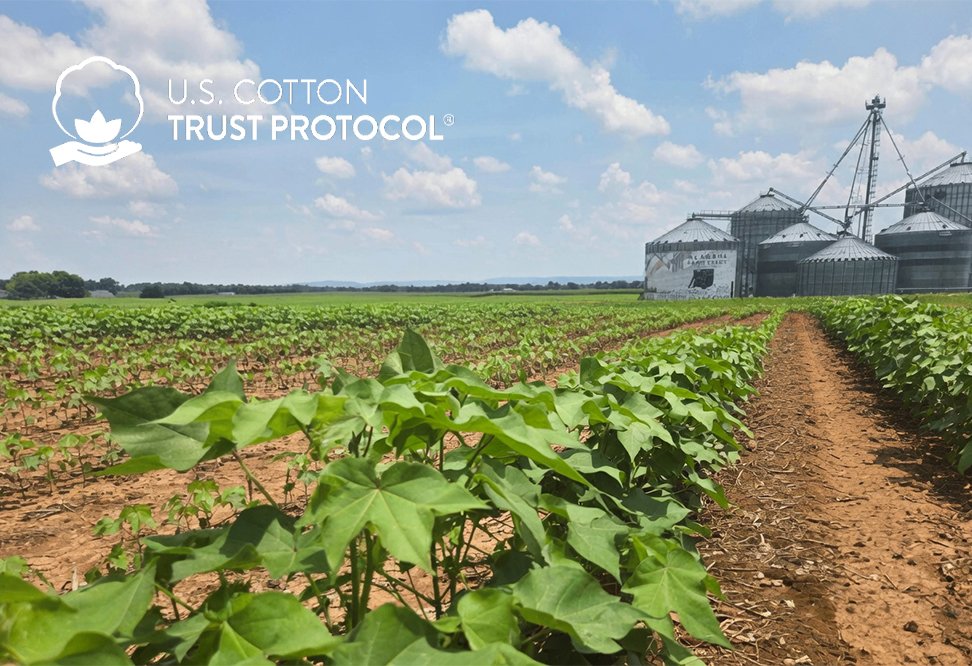
Nearly one-quarter of the 2026 U.S. cotton area will generate field-level sustainability data, expanding traceable sourcing options despite a year-on-year decline in enrolled acreage.
The U.S. Cotton Trust Protocol says 2.34 million planted acres are participating in its field-level sustainability programme for the 2026 crop year. This represents 23.8%—nearly one in four—of the 9.85 million acres planted with cotton across the United States.
Coverage remains substantial
The 2026 figure is lower than the record 2.58 million acres enrolled in 2025, a decline of approximately 9%. The programme’s share of national cotton acreage has also fallen from roughly 28% to 24%, partly because total U.S. plantings increased 6% this season. Nevertheless, the scale remains commercially significant for brands seeking independently verified environmental data linked to identifiable cotton supply.
Participating farms provide data covering water and energy efficiency, greenhouse-gas emissions, land use, soil conservation and soil carbon. Farm-level results are measured using Field to Market’s Fieldprint Calculator and subjected to third-party verification.
Three cotton sourcing options
The programme’s traceability system now allows brands to track conventional U.S. Cotton, Protocol Cotton from enrolled growers and U.S. Regen Cotton recognised through the Field Partner Program. The regenerative initiative began as a pilot in 2025 and combines verified practices and measurable outcomes with supply-chain traceability.
The Protocol Consumption Management Solution records fibre transactions using USDA permanent bale identification numbers and transfers validated information into TextileGenesis, where mills and manufacturers complete the product chain. Brands can then receive article-level reporting covering finished-product shipments and fibre volumes.
Data must convert into orders
The Trust Protocol now includes more than 2,800 mill and manufacturer members across 56 countries and over 55 companies and brands. Its 2024/25 reporting showed that 20 brands traced 126,000 tonnes of Protocol fibre into approximately 690 million finished products.
The next test is whether brands reward participating growers through firm purchasing commitments and premiums. For overseas spinners and garment exporters, membership alone will not be enough: bale-level reconciliation, transaction documentation and accurate product data will determine whether traceable cotton reaches finished goods without losing its verified identity.
