

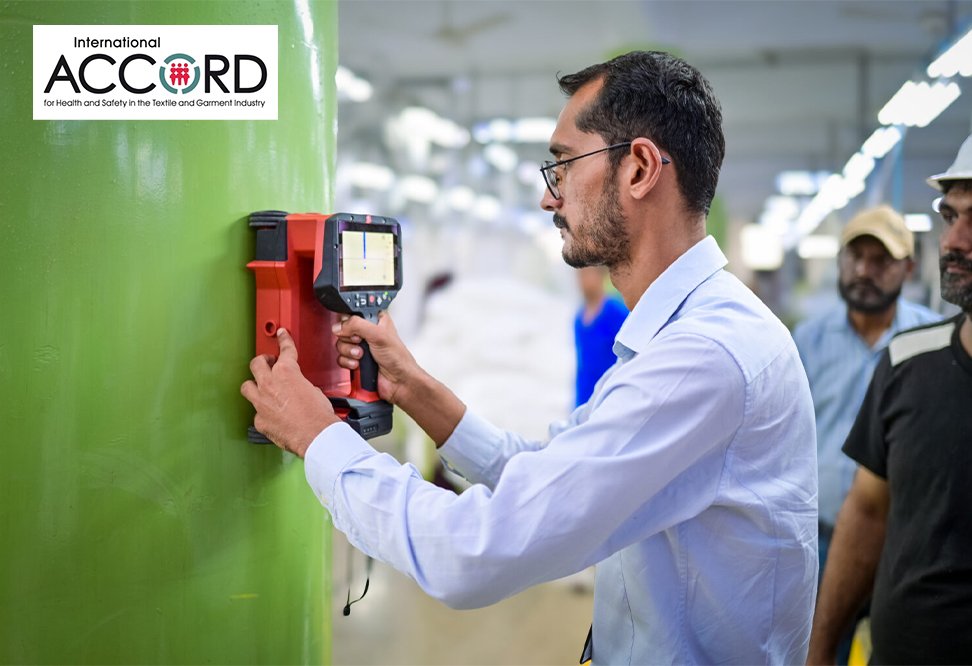
More than $26 billion of annual sourcing from Bangladesh and Pakistan now sits under the Accord framework, making factory safety an increasingly embedded requirement for apparel exporters.
The International Accord for Health and Safety in the Textile and Garment Industry has reached 300 global brand and retailer signatories, its highest participation since the system emerged following the 2013 Rana Plaza disaster. The signatories, headquartered across 26 countries, source approximately $26 billion of goods annually from Bangladesh and Pakistan.
Collectively, their sourcing networks cover more than 2,000 factories and 3.4 million workers across the two countries. The legally binding programme combines independent structural, fire, electrical and boiler inspections with remediation, worker training and a complaints mechanism.
Bangladesh remains the largest programme
As of August 31, the Bangladesh Safety Agreement covered 1,759 factories employing 2.8 million workers, supplied to 246 participating brands. More than 76,000 inspections have identified almost 294,000 safety findings, with average remediation progress reported at 81%.
However, the Accord acknowledges that hundreds of Bangladeshi factories still have outstanding hazards. Negotiations are therefore being prepared to renew the Bangladesh Safety Agreement beyond its current December 31, 2026 expiry.
Pakistan moves into implementation
Pakistan’s programme now covers 452 factories, 522,549 workers and 143 global brands. By August 31, Accord engineers had completed 454 initial inspections, while 255,012 workers had participated in All Employee Meetings. The complaints mechanism had received 780 cases.
The renewed Pakistan Accord took effect on January 1, 2026, and is scheduled to renew automatically through the end of 2029.
For Pakistani exporters, Accord participation should increasingly be viewed as market infrastructure rather than audit overhead. Global buyers sourcing billions of dollars from Pakistan are embedding independent safety verification into supplier relationships.
Factories that close corrective actions quickly, maintain transparent safety records and institutionalise worker reporting can strengthen buyer confidence. The next competitiveness frontier is therefore broader than social compliance paperwork: verified structural, fire, electrical, boiler and worker-safety performance is becoming part of a factory’s commercial credibility.
