

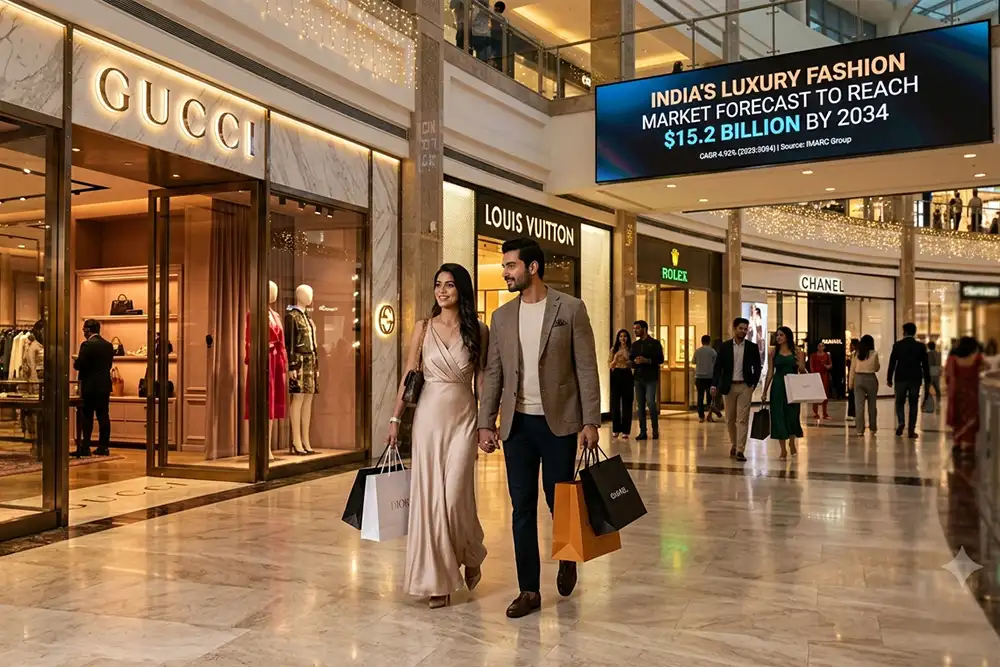
Rising affluence, wedding spending and international-brand expansion are enlarging the opportunity, although high duties and limited premium retail space continue to restrict growth.
India’s luxury fashion market is forecast to expand from $9.85 billion in 2025 to $15.17 billion by 2034, representing a compound annual growth rate of 4.92%, according to IMARC Group. The estimate covers luxury clothing, footwear and accessories, including jewellery, bags and watches, making it broader than the premium-apparel market alone.
Apparel commands the largest share
Clothing and apparel accounted for an estimated 61% of the market in 2025. Demand is supported by designer ethnic wear, bridal and occasion clothing, premium western apparel and consumers’ willingness to pay for craftsmanship, exclusivity and differentiated materials. Women represented 52% of spending, while North India led geographically with a 30% share.
The underlying consumer base is also expanding. Goldman Sachs Research expects India’s affluent population to increase from around 60 million people in 2023 to 100 million by 2027, creating a larger addressable market for premium and luxury brands.
Stores remain central to luxury selling
Physical retail generated approximately 70% of luxury-fashion sales in 2025, reflecting the importance of product handling, alterations, personal styling and immersive brand environments. International companies commonly enter through local partners capable of managing stores, distribution and regulatory complexity; Reliance Brands says it has introduced 85 international labels across luxury, premium and lifestyle categories.
Recent expansion continues: Reliance announced the Indian launch of SKIMS in Delhi and Mumbai through physical and digital channels in August 2026.
Infrastructure constrains the opportunity
India still has a shortage of suitable luxury retail locations. Reuters reported in March that the country had only three malls regarded as dedicated luxury destinations, limiting store expansion by international fashion houses. High import duties, taxation, counterfeiting and price-sensitive consumers create additional barriers.
For textile and apparel suppliers, the opportunity lies in premium fabrics, artisanal detailing, occasion wear and smaller exclusive collections. The next growth test will be whether new retail infrastructure and localised sourcing allow brands to expand beyond Delhi and Mumbai without weakening exclusivity or margins. The IMARC projection should be treated as a directional commercial forecast because detailed underlying methodology is not publicly disclosed.
