

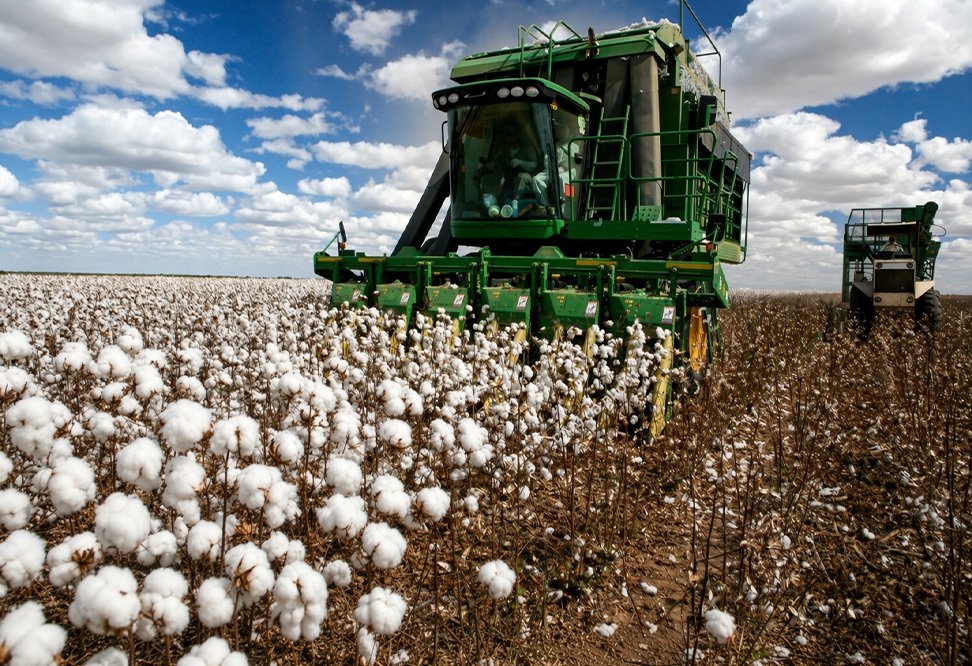
Brazil’s 19% export surge reinforces its position as the world’s leading cotton exporter, with China, Bangladesh, Türkiye, Pakistan, Vietnam and India absorbing most of the growth.
Brazil exported a record 3.374 million tonnes of cotton lint in the 2025/26 marketing year, up 19% from 2.836 million tonnes a year earlier. Export revenues also reached a record $5.3 billion, according to the latest Cotton Brazil report from Abrapa, based on official ComexStat data.
Asian mills dominate demand
China remained Brazil’s largest customer, importing 770,523 tonnes, or 23% of shipments. Bangladesh followed with 584,756 tonnes (17%), while Türkiye took 441,054 tonnes (13%). Together, the three markets accounted for 53% of Brazilian exports.
The broader Asian sourcing picture is equally significant. Pakistan imported 414,340 tonnes, representing 12% of Brazilian exports, while Vietnam bought 393,206 tonnes (12%) and India 353,820 tonnes (10%). Brazilian exports to India have expanded more than 40-fold in two years, highlighting the diversification of Brazil’s customer base.
July alone produced exports of 155,000 tonnes, up 21.8% year on year and worth $262.4 million. Bangladesh was the largest destination that month, followed by Türkiye and Vietnam.
Supply growth may pause
The record comes as Brazil prepares for a smaller crop. Abrapa now forecasts 2.00 million hectares planted in 2026, down 8%, with production estimated at 3.90 million tonnes, 8.2% lower year on year. Average yield is projected at 1,954 kg/ha.
Despite the production decline, Brazil is expected to remain the world’s leading cotton exporter in 2026/27, with shipments projected at about 3.33 million tonnes.
A stronger competitor in mill sourcing
For Asian spinning mills, Brazil is becoming a structurally more important alternative to US, Australian and West African cotton. Scale, increasingly consistent fibre quality and traceability are supporting that shift. Abrapa says its Responsible Brazilian Cotton programme covered more than 80% of national production in 2024/25, with auditable environmental, labour and legal requirements.
The next key signal will be whether tighter 2026 production supports firmer Brazilian basis levels while mills in Pakistan, Bangladesh, India and Vietnam continue expanding procurement.
