

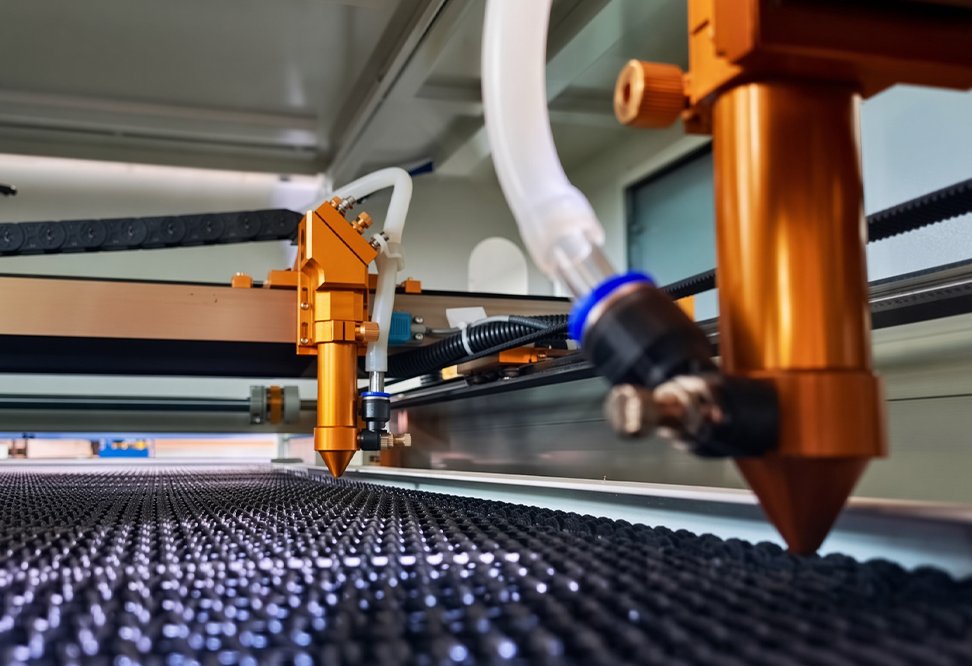
China’s scan-to-cut apparel technology shows how machine vision, digital pattern processing and laser cutting could compress made-to-measure production from a multi-stage cutting-room workflow into a highly automated process.
A Chinese smart manufacturing system is demonstrating how automated fabric scanning and precision laser cutting can shorten the production cycle for customised garments. The equipment scans the fabric, identifies the required cutting geometry and automatically cuts garment components, leaving sewing as the principal remaining assembly operation.
According to a CGTN demonstration published on August 21, the complete customised garment can be produced and delivered in around one hour, although the report does not disclose the machine manufacturer, laser specification or individual cutting-cycle time.
Vision replaces manual positioning
The important technological element is the combination of machine vision with digitally controlled cutting. Automated scanning can locate fabric and pattern positions before the cutting head follows the generated contours, reducing dependence on manual alignment.
Commercial vision-cutting systems already use techniques including contour extraction, multipoint positioning and deformation matching to compensate for printed or distorted fabrics. Such capabilities are particularly relevant for digitally printed sportswear, patterned fabrics and smaller customised orders where alignment errors can quickly increase waste.
Cutting rooms become more digital
For apparel factories, the potential benefit extends beyond replacing a cutting operation. Connecting customer or CAD data directly to scanning and cutting can reduce several activities associated with marker preparation, pattern positioning and manual handling, while making very small production runs more feasible.
Laser systems can also cut without physical blades, potentially reducing tool wear and enabling rapid pattern changes. Their economics, however, depend heavily on fabric composition, material width, required edge quality, cutting speed and laser energy demand.
The missing numbers matter
The CGTN demonstration is compelling, but it is not yet sufficient to assess industrial competitiveness. No data were provided for cutting speed, accuracy tolerance, maximum fabric width, laser power, energy consumption, material utilisation, capital cost or supported fibre types.
Those metrics will determine whether the system is primarily suited to retail-level customisation and sampling or can compete with high-throughput automated knife-cutting systems in industrial apparel production.
For manufacturers, the larger signal is clear: the cutting room is moving toward vision-guided, software-driven and increasingly autonomous production. The next test is whether these systems can deliver equivalent economics at factory scale—not merely impressive speed for a single customised garment.
