

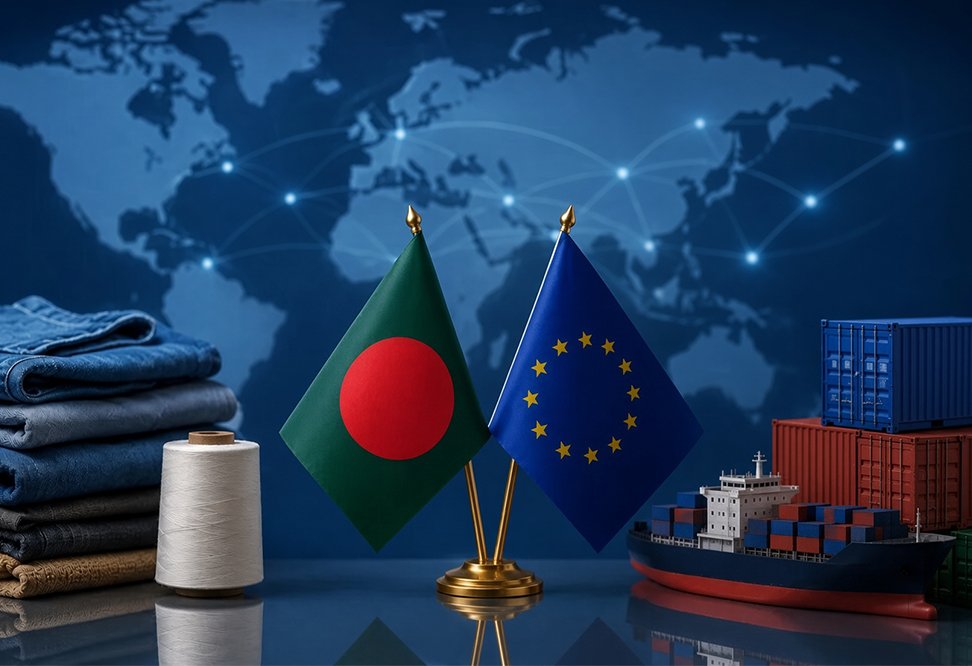
With textiles and apparel accounting for almost 94% of Bangladesh’s exports to the EU, a future FTA could become critical to protecting the country’s largest garment market as preferential LDC access eventually expires.
Bangladesh expects to begin formal free-trade agreement negotiations with the European Union in the second week of September 2026, according to a senior Commerce Ministry official, as Dhaka accelerates efforts to secure longer-term market access beyond its least-developed-country status. The EU has so far publicly indicated readiness for exploratory discussions rather than announcing a completed negotiating mandate.
The commercial stakes are substantial. EU-Bangladesh goods trade reached €23.3 billion in 2025, with the EU running a €19.1 billion deficit. Textiles and apparel represented almost 94% of EU imports from Bangladesh, making trade terms particularly consequential for the country’s garment industry.
EBA gives Bangladesh breathing room
Bangladesh is currently the EU’s largest beneficiary of the Everything But Arms (EBA) programme. Around €19 billion of Bangladeshi exports used EBA preferences in 2024, with a 96% utilisation rate.
Under the EU’s new GSP framework, countries graduating from LDC status retain EBA preferences for another three years, potentially giving Bangladesh duty-free access until at least the end of 2029 under the present graduation timetable.
Bangladesh is scheduled to graduate on 24 November 2026, although the UN Committee for Development Policy has supported Dhaka’s request for an extension to November 2029; final General Assembly action is still pending.
Rules of origin raise the stakes
An FTA could eventually provide a more durable alternative to unilateral preferences. Bangladesh is also examining GSP+, but apparel exporters face tougher rules of origin, including double transformation requirements that are challenging for woven garments dependent on imported fabrics.
Dhaka says negotiations will also address non-tariff barriers, trade facilitation, regulatory reforms and a national single-window system.
For Bangladesh’s mills and garment factories, the competitive pressure is increasing as Vietnam already has an EU FTA and India has concluded one in 2026. The decisive issue is therefore not merely securing tariff preferences, but negotiating rules of origin that allow Bangladesh’s large imported-input apparel base to remain commercially competitive.
