

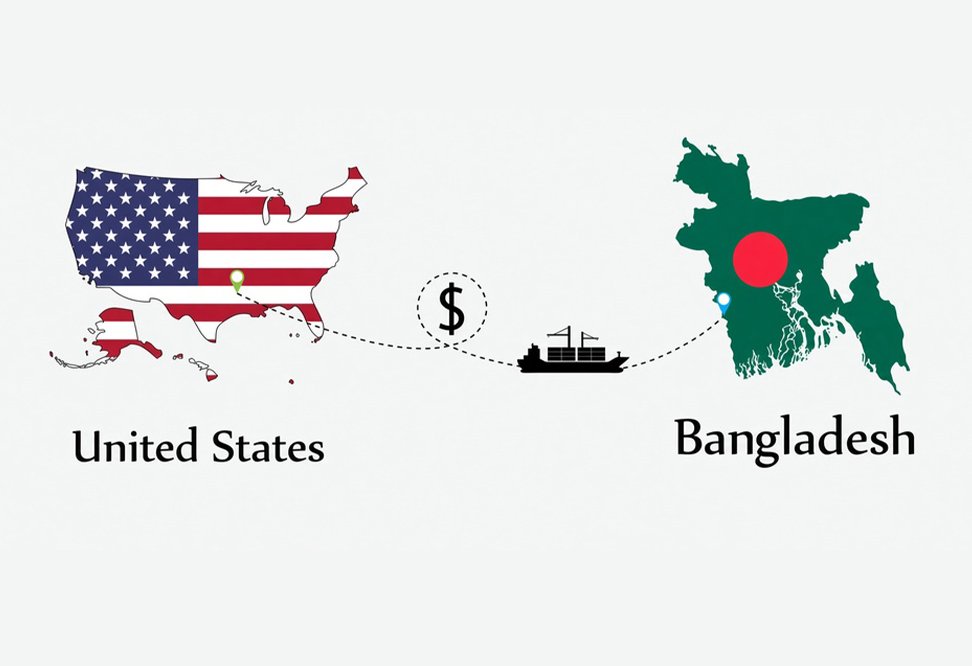
The headline 36.5% tariff burden reflects the superseded 2025 regime; under the current US framework, Bangladeshi apparel generally faces its roughly 16.5% MFN duty plus a 10% Section 301 surcharge, with potential relief linked to US textile inputs.
Bangladesh’s garment exporters continue to face elevated US import costs, but the 36.5% effective tariff cited in recent industry reporting no longer reflects the current tariff regime.
That calculation combined Bangladesh apparel’s average 16.5% Most-Favoured-Nation duty with the 20% reciprocal tariff imposed in 2025. The reciprocal tariff regime was subsequently overturned, and the US introduced a different trade measure in July 2026.
Current burden is closer to 26.5%
Effective July 24, 2026, the US imposed a 10% Section 301 tariff on Bangladesh following investigations into trading partners’ enforcement of forced-labour import prohibitions. The duty is additional to normal product-specific tariffs.
With BGMEA estimating the average conventional US tariff on Bangladeshi apparel at approximately 16.5%, the indicative combined burden is therefore around 26.5%, although actual rates vary significantly by HS code.
That remains a substantial disadvantage in a sector where FOB margins are thin and US buyers frequently negotiate cost increases back through the supply chain.
US cotton could unlock relief
Bangladesh nevertheless received an important concession under the new US framework. Washington has directed USTR to establish tariff-rate quotas for Bangladesh, Cambodia, Indonesia and Malaysia, allowing specified textile and apparel volumes to enter free of the additional Section 301 tariff based on those countries’ purchases of US cotton and textile inputs.
Until those TRQs are operational, the 10% tariff continues to apply.
Sourcing economics shift again
The mechanism could strengthen commercial links between US cotton growers, Bangladeshi spinning mills and garment exporters, particularly because cotton products dominate Bangladesh’s US apparel business.
But the competitive equation remains fluid. India and Pakistan also face 10% Section 301 tariffs, while Vietnam faces 12.5% and does not receive the same textile-input mechanism.
For Bangladesh, the critical next development is therefore not the outdated 36.5% figure, but how quickly the US implements the textile TRQs, their permitted volumes, and how much US-origin input will be required to qualify. Those details could materially influence yarn sourcing, garment costing and US order allocation.
