

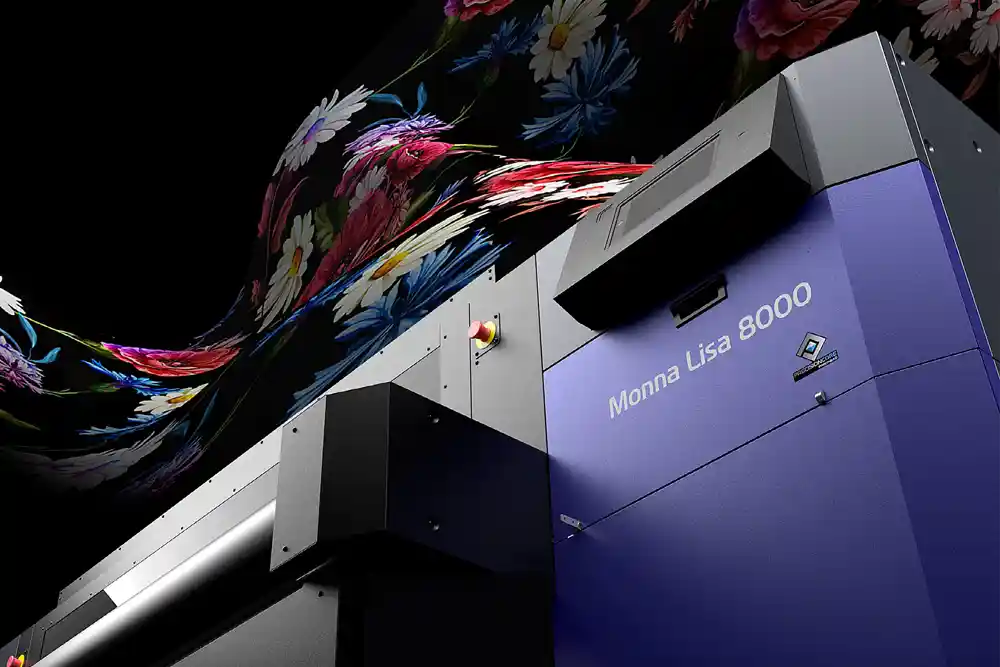
Strategic Revenue Insights expects printer revenues to grow 10.4% annually as shorter runs, customisation and faster fashion cycles accelerate the shift from analogue to digital textile printing.
The global digital textile printer market is projected to grow from $3.80 billion in 2025 to $9.25 billion by 2034, according to Strategic Revenue Insights (SRI), implying a 10.4% compound annual growth rate during 2026–2034.
The forecast covers direct-to-fabric, sublimation and pigment printing equipment serving apparel, home textiles and signage, with textile mills, fashion brands and print-service providers among the principal customers.
Short runs change printing economics
The strongest structural driver is the increasing need for smaller batches, rapid design changes and on-demand production. Digital systems avoid screen preparation and allow designs to move directly from digital files to printing, making them particularly attractive where SKU proliferation makes long analogue runs less economical.
SRI identifies apparel as the largest and fastest-growing application, supported by personalised products and shorter fashion cycles. Home textiles and signage provide additional demand.
Digital printing can also reduce process waste and, depending on the ink system and substrate, lower water and chemical requirements compared with conventional wet-printing routes.
Ink technology widens the addressable market
SRI highlights continuing development across reactive, acid, pigment and sublimation inks. Pigment printing is particularly significant because of its ability to address multiple fibre types, while sublimation remains important for polyester-rich sportswear, fashion and signage applications.
Leading machinery suppliers identified in the report include Epson, Mimaki, Brother, Durst, EFI Reggiani, Roland DG, MS Printing Solutions and SPGPrints.
Forecasts require caution
Market estimates vary substantially because research firms define equipment and digital-printing revenues differently. For comparison, IMARC forecasts the broader digital textile printing market at $5.66 billion by 2034, while Fortune Business Insights projects $21.13 billion.
The investment case therefore rests less on any single market-size forecast than on measurable operating economics. For textile printers, the critical variables will be metres per hour, ink cost per metre, printhead uptime, colour consistency, pretreatment requirements and achievable run length versus rotary or flat-screen printing. Improvements in those metrics will determine how quickly digital technology moves from short-run specialist production into mainstream industrial printing.
