

The US biomaterials developer is positioning genetically engineered silkworms as a scalable route to spider-silk fibres for luxury, performance and technical textiles.
Kraig Biocraft Laboratories is targeting fashion and performance textiles as it scales production of recombinant spider silk produced directly by genetically engineered silkworms.
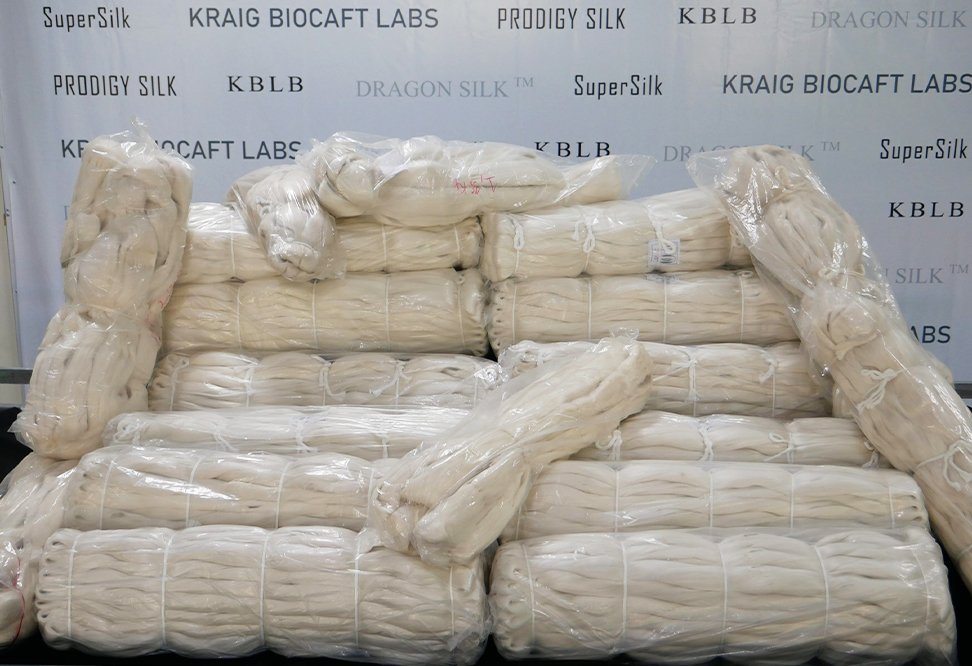
Coinciding with New York Fashion Week, the US biotechnology company said its latest production cycle generated approximately 3.2 metric tonnes of recombinant spider-silk cocoons, its highest reported output to date. The figure follows a May–June cycle that produced nearly 2.5 tonnes.
Silkworms provide the production platform
Kraig’s approach differs from fermentation-based biomaterial systems. It introduces spider-silk proteins into Bombyx mori silkworms, allowing the insects to spin recombinant silk using the established biology and infrastructure of conventional sericulture.
The commercial attraction is potentially significant: existing cocoon production, reeling and downstream silk-processing systems could reduce the need to build an entirely new fibre-manufacturing platform.
Kraig began 2026 targeting a scale-up toward 10 tonnes of recombinant spider-silk cocoons per month. Production progressed from more than 1.3 tonnes in March to roughly 1.8 tonnes available for processing in April and nearly 2.5 tonnes in the May–June cycle.
Fashion is only one target
The company sees potential applications across luxury textiles, performance apparel, protective materials and advanced technical products. Spider silk attracts interest because of its combination of low weight, toughness and mechanical performance, although translating laboratory properties into consistent commercial yarn remains the critical challenge.
Scale is not yet commercial adoption
For textile manufacturers, the important development is not simply the material’s novelty, but whether recombinant spider silk can reach repeatable industrial volumes at an economically viable cost.
Kraig’s rising cocoon output is therefore an important scale-up signal, but the next milestones matter more: reeling yield, fibre consistency, yarn conversion, processing behaviour, price and confirmed commercial orders. Until those are demonstrated at sustained scale, recombinant spider silk remains a promising emerging fibre rather than an established fashion raw material.
