

The certification specialist is moving from back-end factory assessments to consumer-facing proof, just as new EU rules tighten scrutiny of environmental claims.
Bluesign will launch its first global consumer-facing campaign, “The Unseen Process,” on September 20 during New York Climate Week, marking a strategic shift from largely behind-the-scenes textile certification toward direct communication with shoppers.
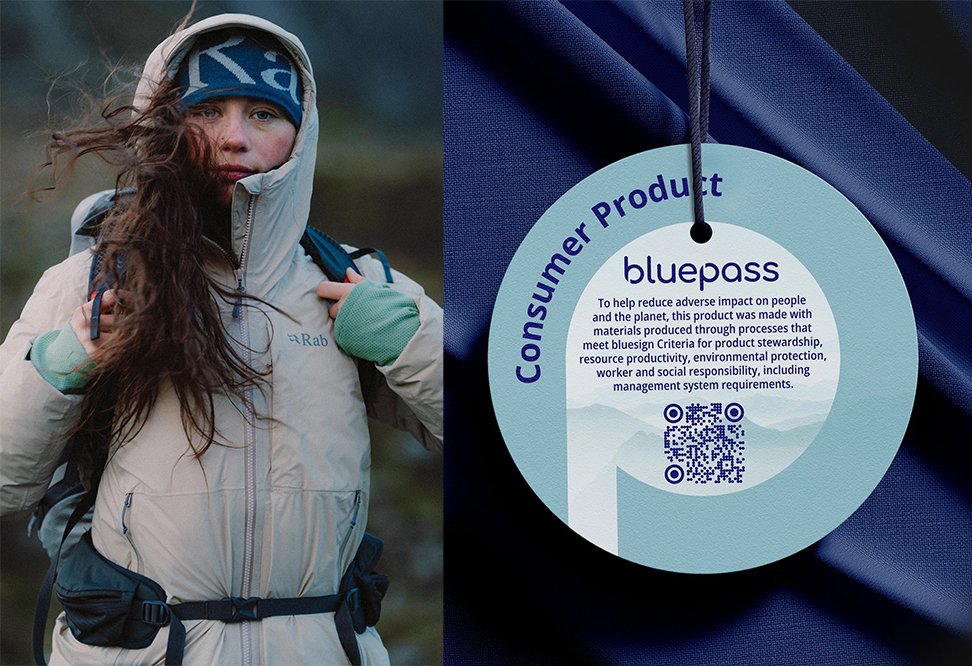
Central to the campaign is bluepass, Bluesign’s new certification mark for finished products, textile articles and chemical products. Each label carries a QR code linking to a Bluesign-controlled verification page, allowing consumers and buyers to see the evidence supporting the certification claim.
Certification becomes visible
Bluepass replaces the previous bluesign PRODUCT and bluesign APPROVED designations. The underlying assessment system remains unchanged, but naming, labelling and access to verification data have been redesigned.
For a finished consumer product to carry the bluepass mark, Bluesign requires at least 90% of its textile components to originate from certified production processes. Bluesign assesses areas including chemical inputs, water and energy use, emissions, occupational safety, emergency preparedness and social responsibility.
EU rules raise the stakes
The timing is deliberate. From September 27, 2026, the EU’s Empowering Consumers for the Green Transition Directive becomes enforceable through member-state legislation.
The rules restrict generic claims such as “green,” “eco-friendly” or “climate friendly” unless they can be substantiated. Sustainability labels must also be based on qualifying certification schemes or established by public authorities.
That creates a major compliance challenge for fashion brands accustomed to broad sustainability language.
Evidence replaces marketing language
For mills and suppliers, the shift means environmental performance increasingly needs to be documented at process and product level, not merely communicated through corporate sustainability reports.
Bluepass illustrates where the market is heading: certifications linked to traceable evidence, independent verification and accessible product-level data.
The next competitive question is whether brands can integrate such verified information into product pages, hangtags and sourcing systems without overwhelming consumers. As regulation tightens, the winning sustainability claim may increasingly be the one that can be proven instantly—not the one that sounds most ambitious.
