

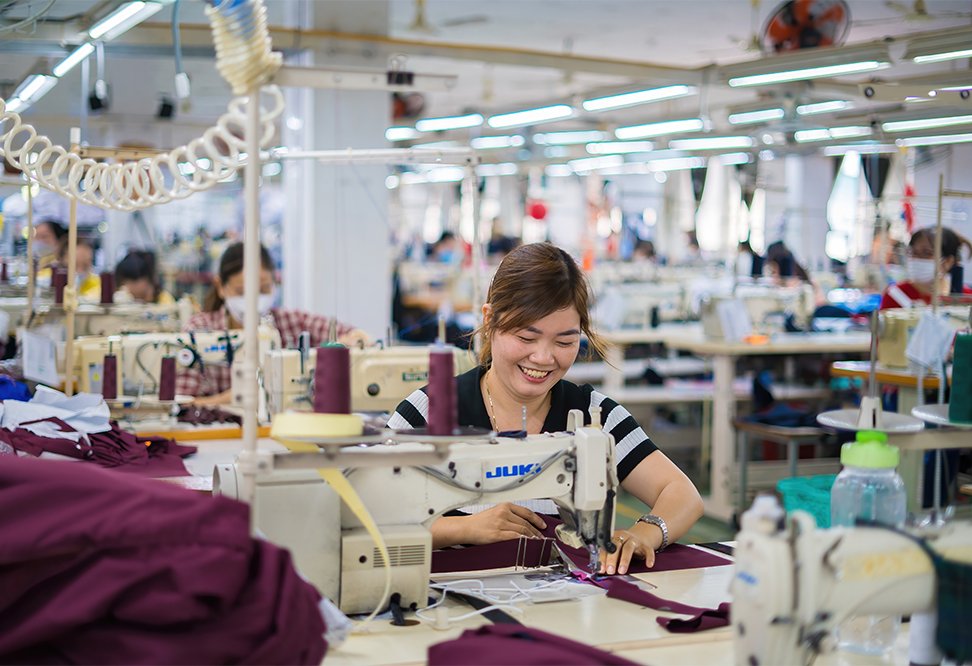
Vietnam needs a stronger final four months to reach its 2026 export goal as US tariffs, higher input costs and uneven garment orders intensify pressure on manufacturers.
Vietnam is targeting about $48 billion in textile and garment exports in 2026, after shipments reached nearly $31.7 billion in January–August, up 2.9% year on year, according to the Vietnam Textile and Apparel Association (VITAS).
The target represents roughly 4% growth from Vietnam’s $46.2 billion of textile and garment exports in 2025. VITAS reported that the industry generated a trade surplus exceeding $20.75 billion last year while supporting more than 3.3 million jobs across the broader sector.
$16.3 billion still to ship
Reaching $48 billion requires Vietnam to export about $16.3 billion during September–December, equivalent to just over $4 billion a month.
Order visibility, however, is uneven. Some knitwear manufacturers have production booked through year-end, while many garment factories have yet to secure the fourth-quarter volumes they expected. Rising raw-material, equipment, transport and logistics costs are adding pressure, while delayed fabric deliveries are disrupting production schedules.
The divergence is also visible upstream: during the first half of 2026, exports of fibres, fabrics, accessories and nonwovens increased 5.6–10.6%, while garment exports declined 0.4%.
US tariff pressure raises the stakes
The US remains Vietnam’s largest textile and apparel market. A major new challenge is the 12.5% Section 301 additional duty applied to most covered Vietnamese goods under US action concerning forced-labour import prohibitions. Countries including Bangladesh, Cambodia, India, Indonesia, Pakistan and Sri Lanka were placed in a 10% tariff category, creating a 2.5-percentage-point differential before other applicable duties and exemptions.
Value replaces volume
Vietnamese manufacturers are consequently prioritising higher-value orders, productivity, cost control, digitalisation and greater control over material sourcing rather than simply maximising production volume. Buyers in the US and EU are simultaneously increasing requirements around traceability, labour practices, emissions, circularity and greener production.
The final quarter will therefore test more than Vietnam’s ability to reach $48 billion. The more important signal will be whether its mills and garment factories can protect margins and orders while competing against sourcing countries facing lower US tariff treatment.
