

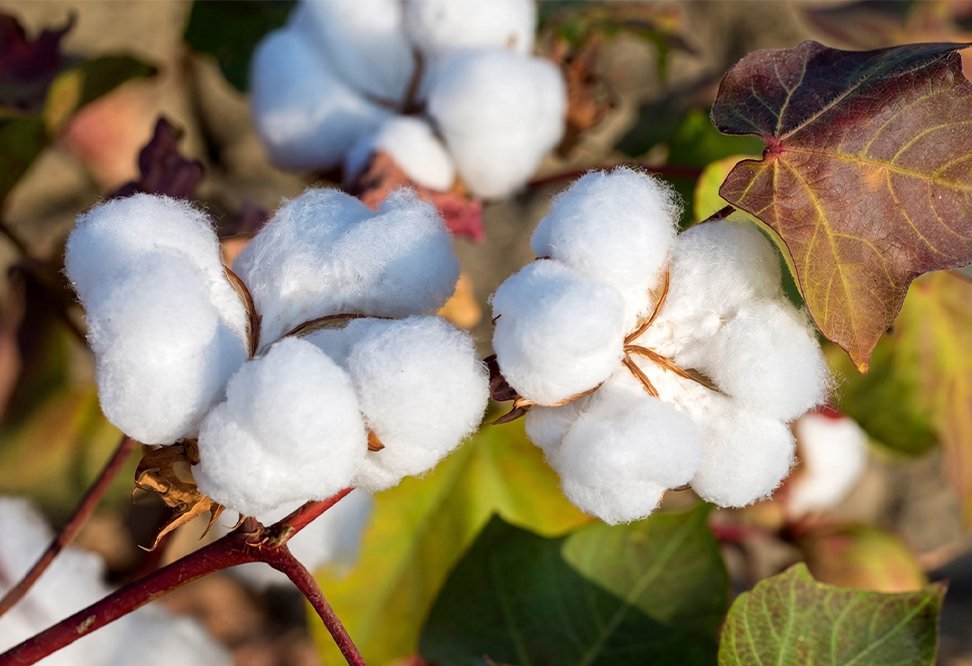
Global cotton supply is not yet critically short, but falling inventories, volatile crop forecasts and firmer prices are making procurement timing increasingly important for spinning mills.
Cotton buyers are entering 2026/27 with unusually wide uncertainty over supply, as leading forecasters offer different assessments of the global balance while weather, pests and Chinese purchasing remain capable of tightening availability quickly. The result is greater price and procurement risk for import-dependent spinning industries.
Forecasts point in different directions
The International Cotton Advisory Committee (ICAC) currently projects global 2026/27 production at 26.2 million tonnes, marginally above consumption of 25.9 million tonnes. But ICAC cautions that production estimates historically decline as crop conditions become clearer and suggests output could ease towards 26.0–26.1 million tonnes even under relatively normal conditions.
USDA presents a tighter picture. Its September outlook puts world production at about 117.3 million bales against mill use of 122.9 million bales—a gap of roughly 5.6 million bales. USDA consequently projects global ending stocks at 69.9 million bales, the lowest since 2011/12 if realised.
The forecasts use different datasets and assumptions, but both underline the limited buffer available if crops disappoint or demand strengthens.
Prices already reflect uncertainty
Benchmark prices strengthened through late August. The December ICE contract rose from roughly 84 to 88 cents/lb, briefly reaching 93 cents before easing to around 86 cents in September. The Cotlook A Index briefly exceeded 100 cents/lb and recently stood near 96 cents. Pakistani cotton increased from approximately Rs18,300 to Rs19,300 per maund over the same period.
ICAC’s much wider 2026/27 Cotlook A forecast—62–99 cents/lb, with a 78-cent midpoint—illustrates the degree of uncertainty surrounding the season.
Import-dependent mills carry the exposure
China’s continuing reserve auctions are particularly important. Daily offerings have routinely sold out; subsequent replenishment through imports could tighten exporter stocks further. Pakistan faces an additional structural constraint: ICAC projects its cotton output at only 1.10 million tonnes in 2026/27, increasing dependence on imported fibre.
For spinners, the key question is therefore no longer simply whether world cotton is available. Origin diversification, contract timing, inventory cover, quality requirements and currency exposure will determine procurement competitiveness as the 2026/27 crop develops.
