

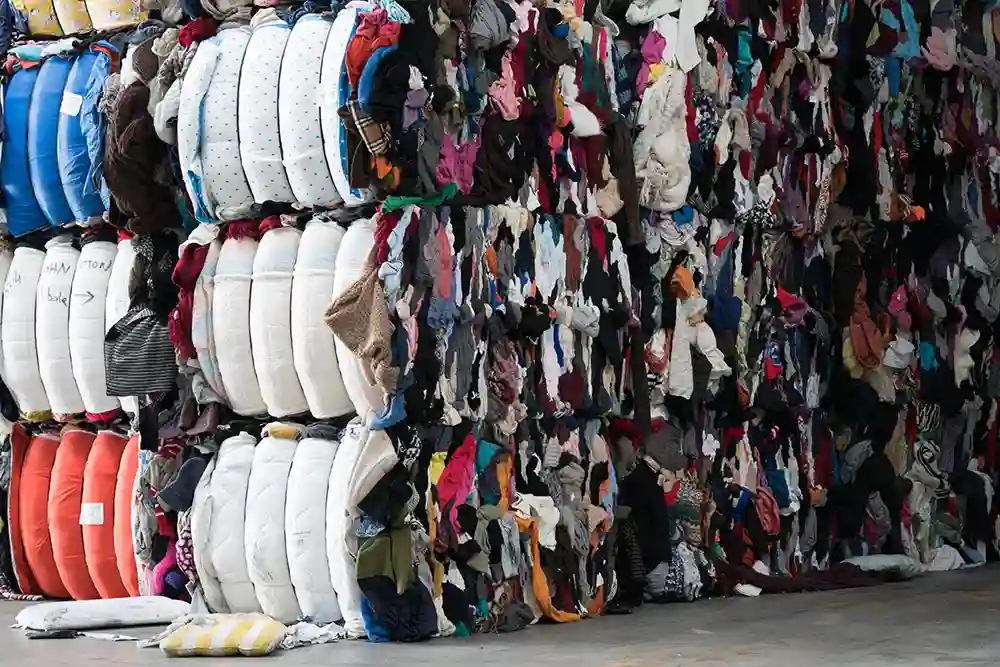
New modelling highlights the gap between recyclable textile feedstocks and usable fibre, with collection, sorting and processing limiting supply.
Textile Exchange has launched a global methodology for assessing textile-to-textile recycled fibre availability for apparel and home textiles. Released October 6, the report establishes a 2025 baseline and projections for 2030, developed with Fashion for Good, Reverse Resources and TEXroad.
Feedstock availability exceeds usable output
The model estimates that recycled spinnable fibre availability could reach 3–5 million tonnes annually by 2030, compared with approximately 1–1.5 million tonnes in 2025.
Recyclable textile feedstocks are projected to increase from around 10 million to 15 million tonnes over the same period. Collection, sorting, processing and technology constraints explain why only part of that material can become spinnable fibre.
Scope covers multiple recycling routes
The analysis includes post-industrial and post-consumer textile waste, mechanical and chemical recycling, and cotton, polyester, nylon, manmade cellulosics, wool and blends. It excludes plastic bottles, leather, down and technical textiles.
Textile Exchange describes the estimates as directional, reflecting incomplete datasets and conservative assumptions. The projections therefore indicate potential availability rather than confirmed production or guaranteed supply.
Better data must meet stronger demand
The organisation calls for recycler and supplier data to refine the model, alongside clearer purchasing signals from brands. Its Action Cohort targets are intended to support demand for textile-to-textile recycled fibres.
Looking ahead, manufacturers and investors can use the framework to distinguish waste availability from commercially usable fibre supply. For Pakistan’s recycling sector, the practical implication is to connect feedstock mapping with sorting capability, processing yields and buyer specifications when assessing expansion opportunities.
