

India’s move from volume-led textile manufacturing toward performance apparel, footwear, composites and geotextiles is creating a new machinery-investment cycle.
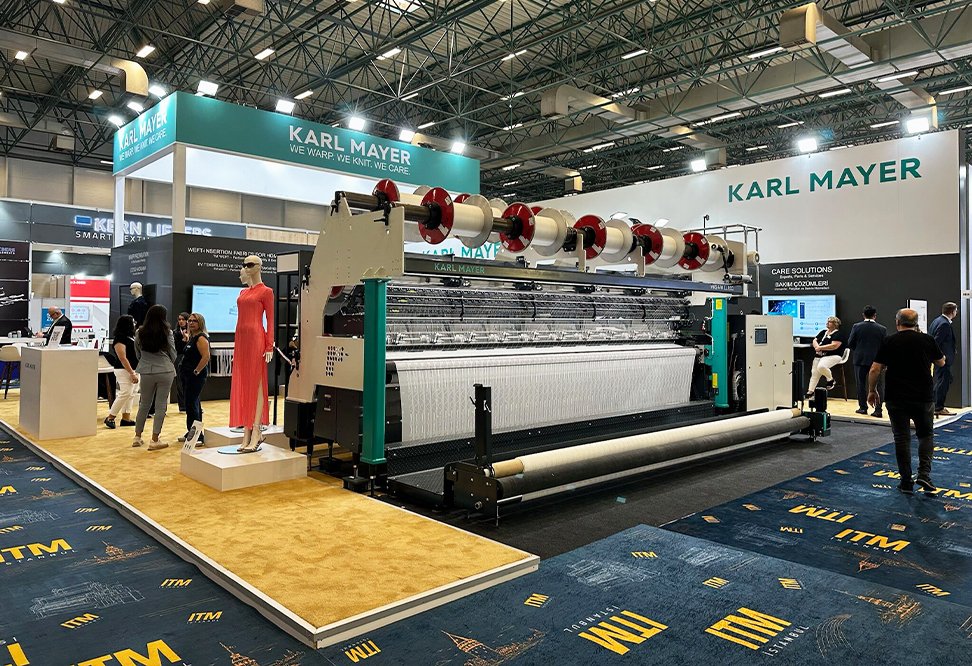
German machinery group Karl Mayer will use INDIA ITME 2026, December 4–9 in Greater Noida, to target growing Indian demand for warp knitting, warp preparation and technical-textile technologies. The company sees India evolving from a cost-focused manufacturing base toward higher-value production built around man-made fibres, automation and differentiated textile applications.
India’s strategic importance is already evident: at ITMA ASIA 2025, about 30% of Karl Mayer’s qualified customer discussions involved Indian companies, leading the manufacturer to suggest India could become its second-largest sales region after China.
Athleisure and footwear drive warp knitting
Karl Mayer reports rising interest from Indian circular knitters seeking to diversify into warp-knitted fabrics. Two- and three-bar tricot machines are already among its best-selling Indian models, particularly for functional athleisure.
New jacquard double-needle-bar raschel machines will target patterned shoe uppers, while applications on display will include four-way stretch fabrics, woven-like warp knits, seamless body-mapping structures and performance apparel.
Weaving preparation targets efficiency
For India’s large staple-fibre weaving base, Karl Mayer will promote its Prosize sizing and Warpdirect warping combination. The company says Prosize can reduce sizing-agent consumption by up to 10%, while Warpdirect targets lower yarn waste, controlled winding density and consistent warp quality.
Technical textiles provide another growth route. Karl Mayer reports demand for weft-insertion warp knitting machines for geogrids and multiaxial systems producing reinforcement fabrics for composites used in transport and wind-turbine blades.
Competitiveness takeaway
The development highlights a widening diversification challenge for Pakistan. India is investing simultaneously in MMF apparel, footwear fabrics, geotextiles, composites and automated textile production, while Pakistan remains more concentrated in cotton-based apparel and home textiles.
Pakistan’s opportunity is to use existing knitting and weaving expertise to enter adjacent higher-value segments—particularly performance warp knits, sportswear, geogrids and reinforcement fabrics. Machinery investment alone will not be sufficient; success will require application development, MMF capability, testing infrastructure and closer collaboration between machinery suppliers, universities and manufacturers.
