

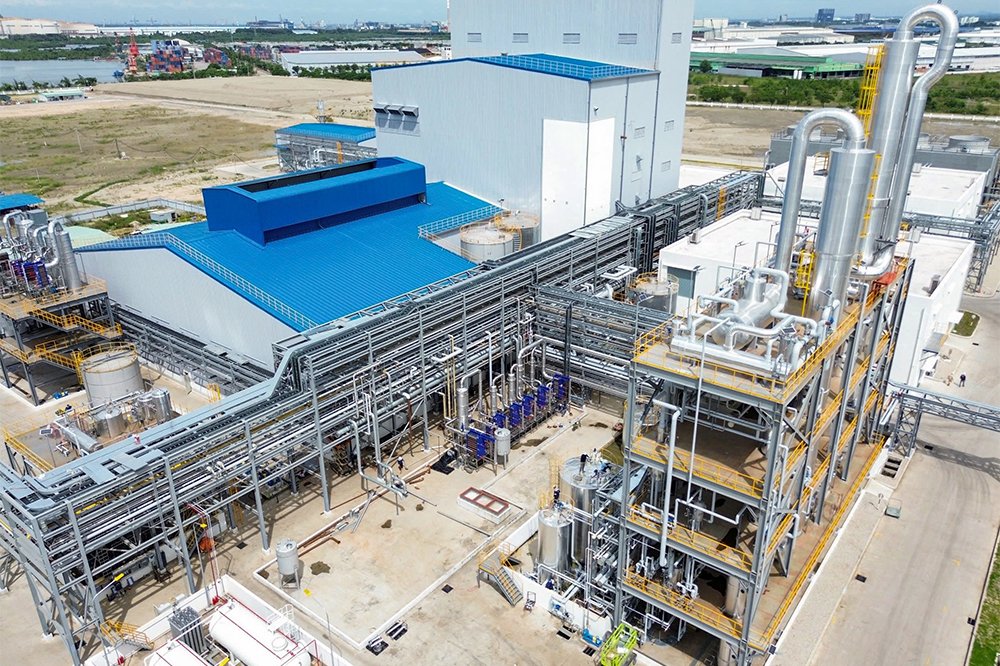
The South Korean fibre manufacturer has launched a 50,000-tonne bio-BDO facility as part of a planned $1 billion investment, establishing an integrated supply chain for renewable-feedstock elastane.
South Korea’s Hyosung TNC has commenced commercial production of sugarcane-derived 1,4-butanediol (bio-BDO) in Vietnam, establishing an integrated manufacturing network connecting renewable raw materials to finished elastane fibres.
Announced on October 19, 2026, the development marks a commercial milestone in the company’s strategy to reduce dependence on fossil-derived feedstocks in stretch-fibre manufacturing.
$1 Billion Investment Supports Capacity Expansion
The new facility in Ho Chi Minh City has an initial annual production capacity of 50,000 metric tonnes of bio-BDO.
Under a planned $1 billion investment programme, Hyosung intends to expand capacity in phases to 200,000 tonnes annually, depending on market demand.
Bio-BDO is manufactured by fermenting sugars extracted from sugarcane, replacing conventional petroleum-derived raw materials.
The intermediate is transported to Hyosung’s Dong Nai operations, where it is converted into polytetramethylene ether glycol (PTMG), a key ingredient in elastane production.
PTMG is subsequently used to manufacture regen BIO spandex, completing the integrated production chain within southern Vietnam.
Renewable Feedstock Without Performance Compromise
According to Hyosung, bio-BDO is chemically identical to conventional BDO, enabling elastane production without sacrificing stretch, recovery or durability. The resulting fibres target sportswear, swimwear, intimate apparel and stretch denim.
Sugarcane sourcing and traceability are verified through the VIVE Sustainable Program, while bio-based content is certified under SGS’s Environmentally Evaluated Product Scheme.
However, renewable feedstock content does not automatically establish biodegradability or a quantified reduction in finished-garment emissions.
Beyond Apparel: New Chemical Markets
Hyosung also plans to supply bio-based intermediates for thermoplastic polyurethane (TPU), automotive components, footwear and biodegradable polymer applications.
For knitting mills and apparel manufacturers, the investment could improve access to bio-based stretch fibres without requiring fundamental changes to fabric manufacturing processes.
Commercial adoption will depend on pricing, certified bio-based content and independently verified environmental performance.
The next milestone is capacity utilisation and phased expansion towards 200,000 tonnes, alongside evidence that renewable elastane can compete economically with conventional alternatives.
