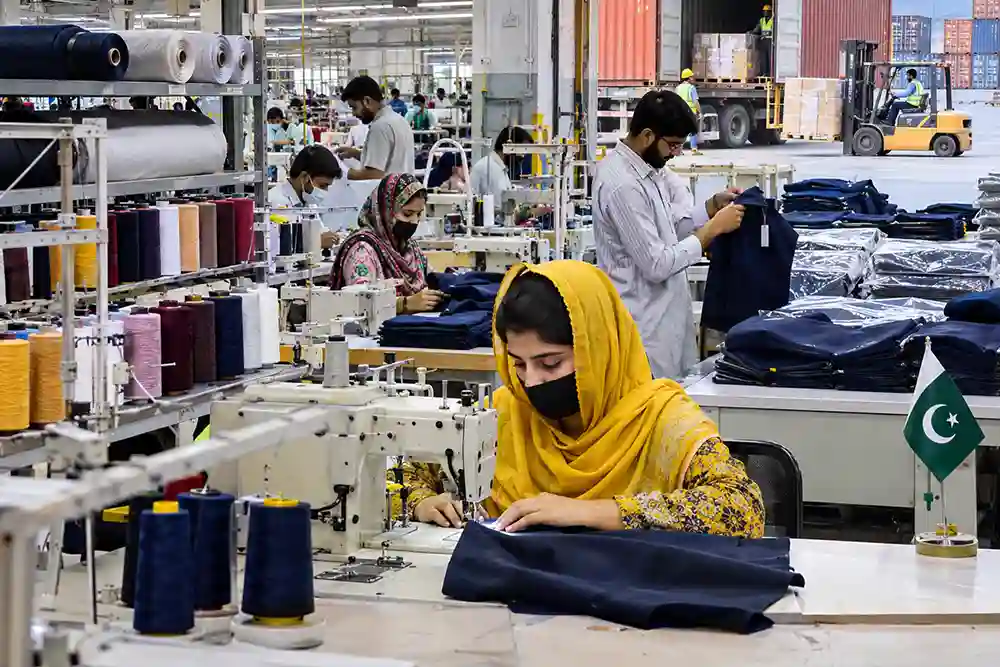
Textile and apparel exports maintained positive momentum in October, supported by stronger garment and yarn shipments, although rising production costs and regional trade disruptions continue to constrain growth.
Pakistan’s textile and apparel exports increased 5.47% year on year to $6.75 billion during July–October FY2026–27, compared with $6.40 billion in the corresponding period last year.
According to official figures reported on November 11, exports reached $1.721 billion in October 2026, up 6.23% from $1.620 billion a year earlier. Shipments also increased 0.70% from September’s $1.709 billion.
The sector generated approximately 59.5% of Pakistan’s total merchandise export earnings during the four-month period.
October Growth Signals Continued Recovery
The latest figures extend the positive trend recorded during the first quarter, when textile exports increased 5.26% to $5.026 billion
However, the industry’s four-month growth remained below the 8.52% increase in Pakistan’s overall merchandise exports, which reached $11.34 billion.
Total imports rose 12.59% to $25.96 billion, widening the national trade deficit by 15.97% to $14.63 billion.
Garments and Cotton Yarn Lead Expansion
Pakistan Bureau of Statistics data for July–September show that readymade garment exports increased 15.69% to $1.223 billion, while knitwear rose 4.14% to $1.483 billion.
Cotton yarn exports climbed 24.47% to $227.1 million, and towel exports increased 10% to $291.6 million.
Performance remained uneven. Cotton cloth exports declined 5.34%, while bedwear shipments were virtually unchanged.
These figures suggest stronger demand for selected finished products and yarn categories rather than uniform growth across the textile value chain.
Cost Competitiveness Remains a Concern
Exporters continue to face elevated energy costs, expensive inputs and disruptions affecting regional trade routes.
Reduced access to Afghanistan and instability in Middle Eastern markets have added pressure to shipments and logistics.
For spinning, weaving and garment manufacturers, sustained export growth will depend on competitive production costs, reliable energy supplies and stronger access to international buyers.
The next important indicator will be November export performance, particularly whether garment demand remains resilient and upstream textile shipments recover as the industry enters the second quarter of FY2026–27.