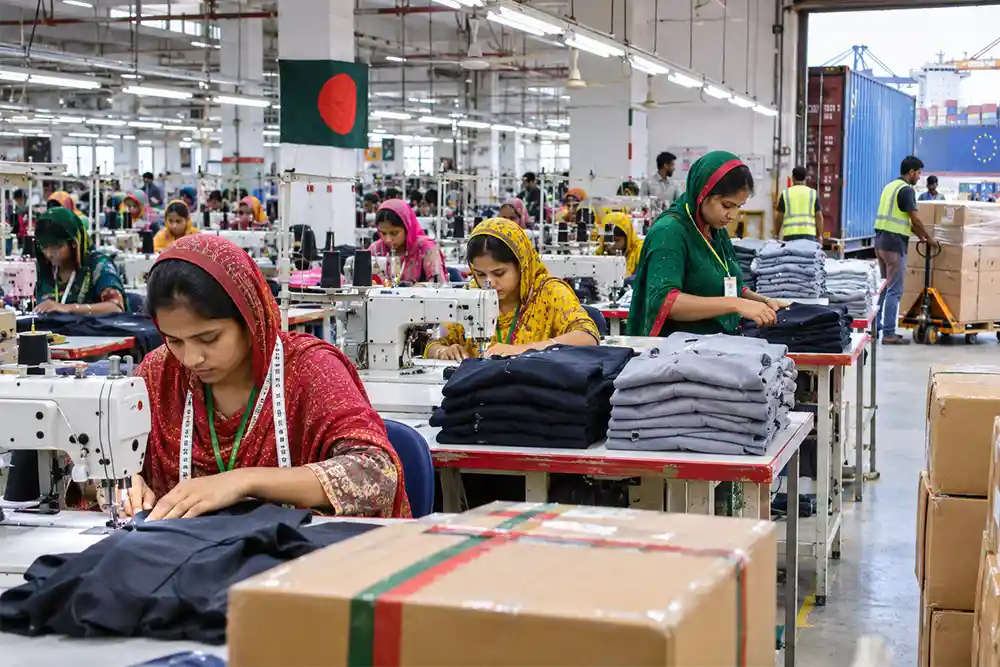
The UN decision extends Bangladesh’s least-developed-country status until November 2029, giving its $38 billion apparel export industry additional time to prepare for the eventual loss of preferential trade benefits.
Bangladesh has secured a three-year extension of its transition from least-developed-country (LDC) status, postponing graduation from November 24, 2026, to November 24, 2029.
The United Nations General Assembly approved the extension on October 29, recognising the country’s economic vulnerabilities and need for further reforms.
The decision offers significant relief to Bangladesh’s garment industry, which depends heavily on preferential access to the European Union.
EU Market Access Remains Protected
Bangladesh currently benefits from the EU’s Everything But Arms (EBA) arrangement, which provides duty-free, quota-free access for almost all products.
According to the European Commission, Bangladesh exported €19 billion worth of goods under EBA preferences in 2024, achieving a 96% preference-utilisation rate.
In 2025, bilateral EU–Bangladesh merchandise trade reached €23.3 billion, with textiles accounting for nearly 94% of European imports from Bangladesh.
The graduation delay preserves Bangladesh’s eligibility for EBA until 2029. A separate EU post-graduation transition arrangement may provide additional time before preferences expire.
Garment Exporters Face Rising Labour Costs
The extension arrives amid growing pressure on Bangladesh’s manufacturing competitiveness.
Garment workers are demanding an increase in monthly minimum wages from 12,500 taka to 30,000 taka, following protests and temporary factory closures.
A newly established wage board has agreed to introduce a revised wage structure from December 1, although the increase remains undecided.
Implications for Competing Exporters
Bangladesh exported $38.48 billion in apparel in 2024, accounting for approximately 6.9% of global clothing exports, according to WTO figures cited by Modaes.
The extension gives manufacturers more time to improve productivity, diversify markets and prepare for stricter post-graduation trade conditions.
For Pakistan, which benefits from the EU’s GSP+ scheme, Bangladesh’s continued tariff advantage means competition for European apparel orders will remain intense.
The next test is whether Bangladesh uses the additional three years to strengthen industrial competitiveness and qualify for sustainable preferential market access after graduation.