

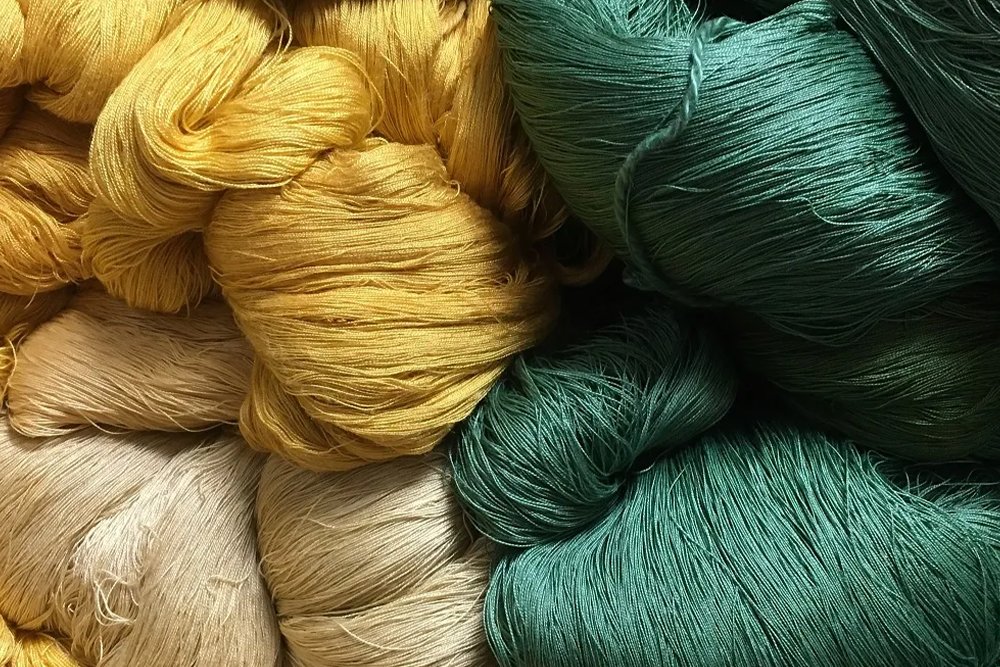
Despite a noticeable slowdown in demand, cotton yarn prices in North India—especially in Delhi and Ludhiana—remained surprisingly stable this week. Buyers in both domestic and export markets have shown limited interest, yet spinning mills and stockists are holding firm on pricing. Traders report that many sellers are unwilling to reduce rates, preferring to wait out the weak sentiment in hopes of a rebound in downstream demand.
In Delhi, 30-count combed yarn for knitting was quoted at ₹260–261 per kg, while 40-count combed yarn was priced at ₹285–286 per kg. Carded yarns also held steady, with 30-count trading at ₹234–236 per kg and 40-count at ₹259–261 per kg. Ludhiana saw similar price trends, with 30-count combed yarn selling at ₹258–268 per kg and 20/25-count combed at ₹248–258 per kg. The stable pricing is being interpreted as a sign of mills’ resistance to further markdowns despite weak buying activity.
In Panipat, a hub for recycled yarn, demand was also subdued. Prices for recycled yarn, polyester fiber, and cotton comber remained unchanged, but buyer interest was low. Ongoing labor shortages have further dampened consumption, limiting activity in the recycled segment. The muted mood in Panipat reflects broader market uncertainty and a cautious approach from buyers.
Meanwhile, raw cotton prices across North India have firmed slightly. This upward trend is supported by limited arrivals in mandis, restricted stock releases from the Cotton Corporation of India, and strong cues from international cotton futures.
In states like Punjab, Haryana, and Rajasthan, cotton is now trading higher despite weak yarn demand—highlighting the disconnect between raw material cost and finished product offtake.
Overall, North India’s cotton yarn market remains in a state of limbo—steady in price, but slow in trade.

