

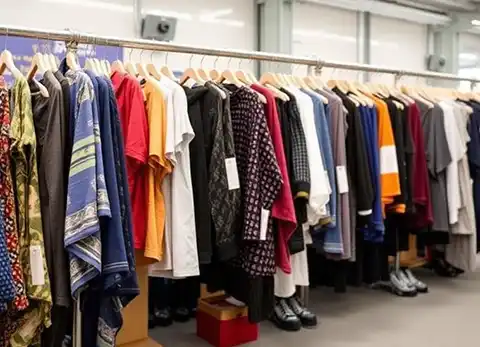
The European Union has launched TexMat, a €6 million experimental project to test a deposit-return system for used textiles, signalling a structural shift in how end-of-life clothing is governed, financed, and measured in Europe.
Funded under Horizon Europe and led by VTT Technical Research Centre of Finland, the pilot will run in Finland and Spain, deliberately chosen to reflect contrasting climates, consumption behaviours, and collection infrastructures.
What TexMat actually changes
TexMat goes beyond awareness or voluntary take-back schemes. Its core innovations are systemic:
- Consumer incentives: Deposits encourage consumers to return garments suitable for reuse or fibre-to-fibre recycling.
- Digital end-of-life notification: Producers receive real-time alerts when their products enter waste-management systems.
- EPR integration: End-of-life textiles become a measurable cost, directly linked to Extended Producer Responsibility (EPR) obligations.
This effectively turns discarded garments from an externality into a tracked liability for brands.
Why the timing matters
The pilot comes ahead of the EU’s mandatory separate textile collection requirement from 2025 under the revised Waste Framework Directive.
- Europe generates >6 million tonnes of textile waste annually.
- <25% is collected separately.
- Only a fraction is recycled at fibre level.
TexMat targets a 15–25% increase in recovery rates while reducing contamination—two of the biggest bottlenecks preventing scalable textile-to-textile recycling.
Strategic signal for the EU Textiles Strategy
TexMat functions as a testbed for the EU’s forthcoming Textiles Strategy, which will require brands to finance collection, sorting, and treatment of textiles they place on the market.
The digital feedback loop is critical: it provides regulators and producers with data visibility on when, where, and how products fail circularity—closing the information gap that has historically undermined EPR effectiveness.
Implications beyond Europe: pressure travels upstream
The consequences are not confined to EU borders.
For Bangladesh, where over 60% of apparel export earnings depend on EU markets, TexMat signals a clear directional shift:
- Material specifications will tighten (mono-materials, recyclability, fibre ID).
- Traceability expectations will rise, aligned with Digital Product Passports.
- Design for circularity will increasingly influence sourcing decisions and cost allocation.
As European brands internalise end-of-life costs, suppliers that reduce downstream waste liabilities—through cleaner material choices and transparent data—gain a structural competitiveness advantage, not just a compliance edge.
Bottom line
TexMat is not about deposits alone. It is about pricing textile waste into the business model.
If successful, it provides the EU with a replicable mechanism to enforce circularity through economic signals and data, rather than declarations. For global suppliers, the message is clear: circular performance will increasingly shape market access, pricing power, and long-term buyer relationships.

