

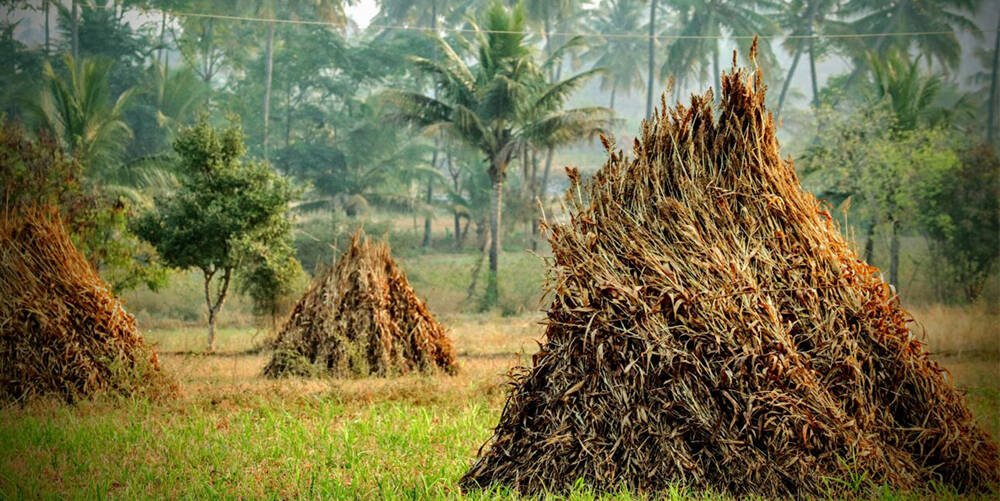
Fashion for Good launches the ‘Untapped Agricultural Waste Project’ to validate and scale technologies that can successfully transform agricultural waste into sustainable textile fibers. With catalytic funding provided by Laudes Foundation, Fashion for Good partners adidas, BESTSELLER, Vivobarefoot, and Birla Cellulose, and six innovators, the consortium project will assess the technical feasibility of natural fibers created by the selected innovators using agricultural waste such as rice husks, hemp, wheat straw, banana, and pineapple.
The 18 month ‘Untapped Agricultural Waste Project’ brings together Fashion for Good partners adidas, BESTSELLER, Vivobarefoot, and supply chain partner Birla Cellulose and six innovators to explore innovations that can repurpose agricultural waste into viable new natural fiber blends. These fiber blends offer alternatives to conventional fibers and can potentially displace virgin fibers derived from unsustainable materials such as oil.
The report, ‘Spinning Future Threads,’ maps agricultural waste in eight countries across South and Southeast Asia, identifying the untapped opportunities in agricultural waste streams, including rice husks, wheat straw, banana, and pineapple production, which are the focus of this project.
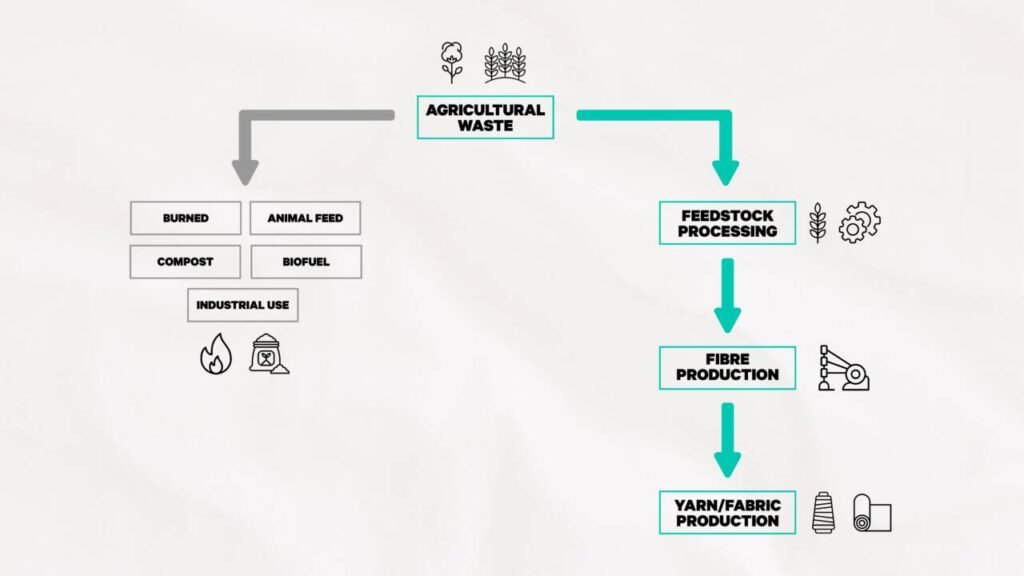
This first phase of the project concludes in December 2022. To further drive supply chain adoption and move beyond lab scale, the project’s next phase will pilot the agri-waste fibers from selected innovators in collaboration with partner brands and supply chain players in commercial facilities to produce larger quantities.
This next phase ultimately aims to enable brand offtake agreements and further finance to facilitate scaling.
Katrin Ley, Managing Director, Fashion for Good, said, “This ambitious project explores a new source of feedstocks for the fashion industry that, if scaled, will help drive both the agriculture and textile industry towards net-zero. We see great potential for these various agriculture waste streams that would otherwise have few secondary uses.
By applying innovative technologies to develop natural fibers, we can diminish the pressure on existing natural fibers and shift away from unsustainable materials and sources.”

