

Massachusetts Institute of Technology (MIT) is a private land-grant research university in Cambridge, Massachusetts. Established in 1861, MIT has since played a key role in developing modern technology and science, ranking it among the top academic institutions in the world. The institute is known for its advanced research output globally. Despite the COVID-19 pandemic, MIT researchers contributed to various novel research outputs.
Among the research outcomes of MIT, fiber-based developments have gained significant attention. The researchers have developed:
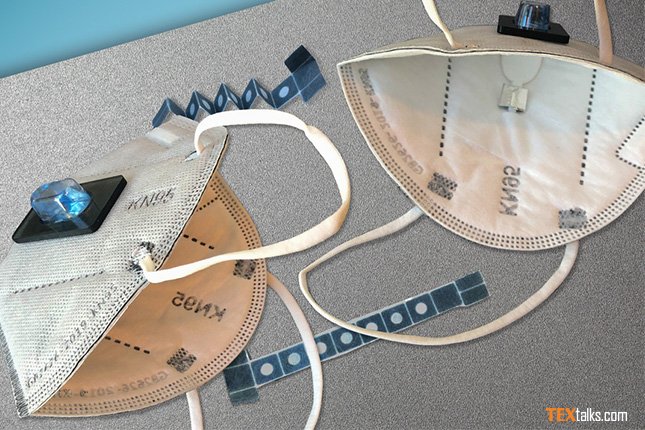
COVID-19 detecting facemasks: Engineers at MIT and Harvard University have designed a novel face mask that can diagnose the wearer with Covid-19 within about 90 minutes. The masks are embedded with tiny, disposable sensors that can be fitted into other face masks and adapted to detect other viruses. They showed that a small splash of liquid containing viral particles, mimicking exposure to an infected patient, can hydrate the freeze-dried cell components and activate the sensor. The sensors can be designed to produce different signals, including a color change that can be seen with the naked eye or a fluorescent or luminescent signal, which can be read with a handheld spectrometer. The researchers also designed a wearable spectrometer that could be integrated into the fabric to read the results and wirelessly transmit them to a mobile device.
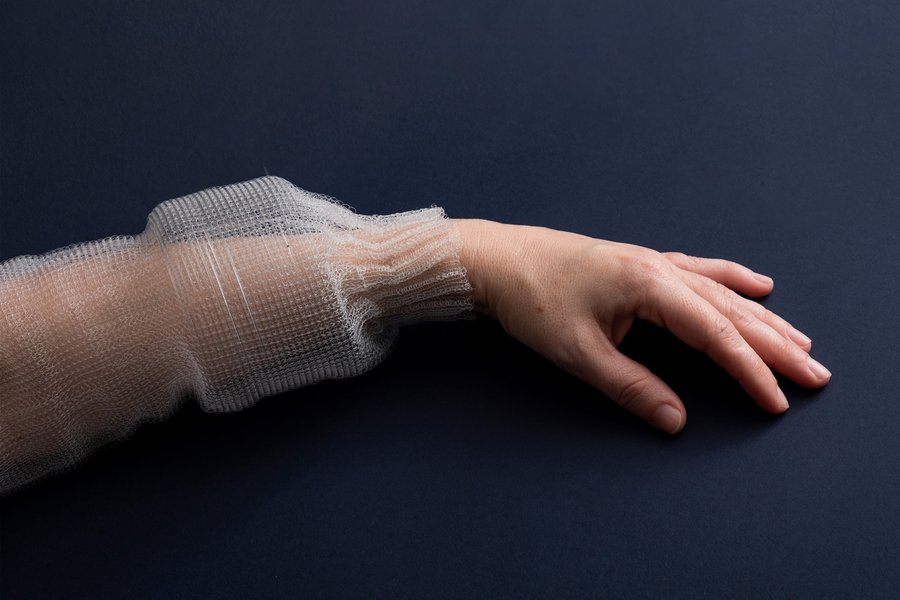 Programmable fibers: MIT researchers have created the first fiber with digital capabilities, able to sense, store, analyze, and infer activity after being sewn into a shirt. The new fiber was created by placing hundreds of square silicon microscale digital chips into a preform used to create a polymer fiber. By precisely controlling the polymer flow, the researchers created a fiber with a continuous electrical connection between the chips over a length of tens of meters. The fiber itself is thin and flexible and can be passed through a needle, sewn into fabrics, and washed at least ten times without breaking down. A digital fiber can also store much information in memory. The researchers were able to write, store, and read the information on the fiber, including a 767-kilobit full-color short movie file and a 0.48-megabyte music file. The files can be stored for two months without power.
The discoveries highlight the potential of textile research. The countries that heavily rely on textiles should learn from these ideas. There is a strong need to shift to these technical textiles, which have a higher profit margin and contribute to society much better. Similarly, in Pakistan, the textile sector is the backbone of the country’s GDP. However, the focus of Pakistan’s textile sector is on conventional textile production, which has narrow profit margins. There is a strong need to invest in R&D for better outputs, with the sooner, the better ideology. Currently, Pakistan is only winning global orders based on lower prices. However, it is becoming inevitable to produce technical textiles due to their better performance and business opportunities with changing world demands.

