

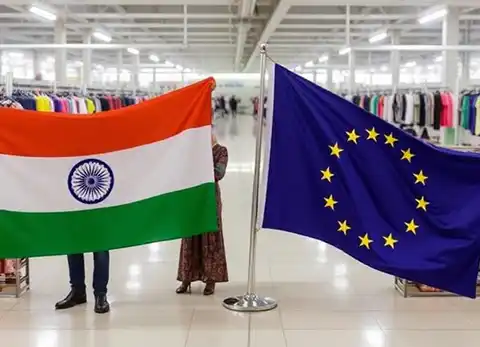
Textile and apparel exporters in Tiruppur, India’s largest knitwear and garment hub, are optimistic as reports indicate that the European Union and India have reached the final stage of a long-pending Free Trade Agreement (FTA)—nearly two decades in the making.
According to Tiruppur Exporters’ Association (TEA) President KM Subramanian, exporters see the deal as a “game-changer”, especially at a time when high US tariffs have constrained market access. The FTA is expected to be signed at a summit in New Delhi on January 27.
European Commission President Ursula von der Leyen reinforced expectations by stating publicly that negotiations are in their final stretch, calling the pact “the mother of all trade deals.”
Why Tiruppur Matters
- Tiruppur currently exports ~USD 1.74 billion worth of apparel to the EU.
- This represents about 22.9% of India’s total textile and apparel exports to the EU.
- The cluster is a major engine for employment, MSME-led manufacturing, and export growth.
However, Indian exporters currently face tariff disadvantages compared with competitors such as Bangladesh, Vietnam, and Turkey—many of whom already enjoy preferential or zero-duty access to EU markets.
Expected Impact of the FTA
According to TEA and the Apparel Export Promotion Council (AEPC):
- Zero-duty access for Indian apparel across all 27 EU member states from day one.
- Improved competitiveness against regional rivals.
- Strong support for employment-intensive MSME clusters like Tiruppur.
- A major contribution toward India’s target of ₹9 lakh crore (≈USD 108 bn) in textile and apparel exports by 2030.
AEPC Chairman A Sakthivel described the agreement as a “once-in-a-generation opportunity” for India’s garment sector, which already exports more than USD 4.5 billion annually to the EU.
Strategic Takeaway
For Tiruppur—and India’s broader textile ecosystem—the India–EU FTA is not just about tariff relief. It is about restoring competitiveness, securing long-term market access, and positioning India as a global leader in sustainable, inclusive manufacturing as part of India Vision 2047.

