

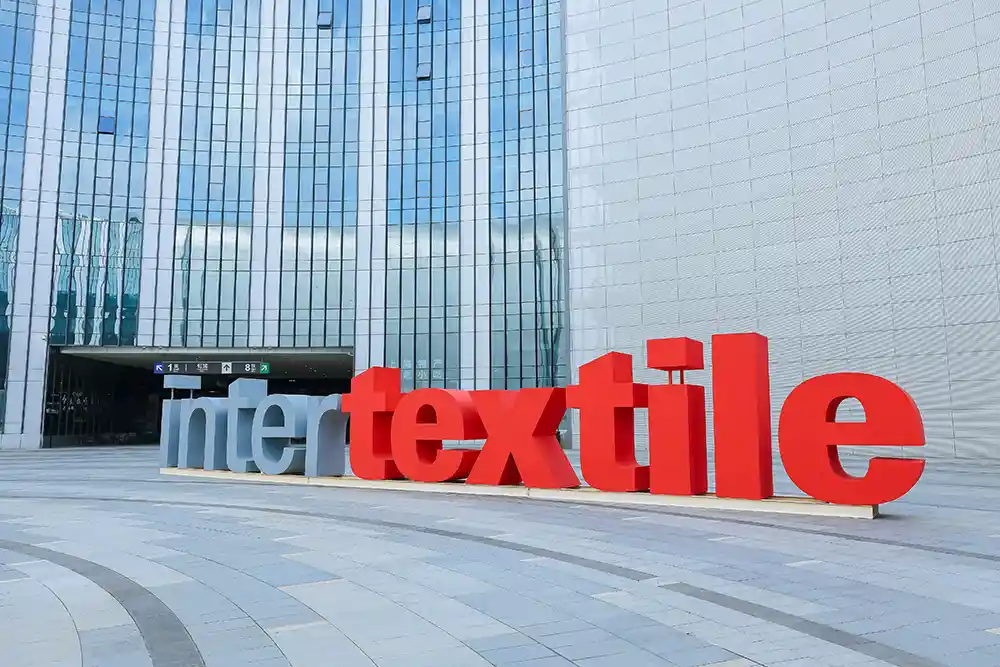
Hong Kong, India, Italy, Japan, Korea, Malaysia, Taiwan and Türkiye will mount dedicated pavilions as Intertextile Shanghai combines traditional textile strengths with sustainability, functional materials and digital manufacturing.
Intertextile Shanghai Apparel Fabrics – Autumn Edition 2026 will bring together eight international country and regional pavilions when it opens at Shanghai’s National Exhibition and Convention Center on 25–27 August, reinforcing the fair’s role as a major meeting point for global fabric sourcing. The participating pavilions represent Hong Kong, India, Italy, Japan, Korea, Malaysia, Taiwan and Türkiye.
The event is being organised around four themes — Fashion Forward, Sustainability, Performance Textiles and Textile Future — as buyers increasingly evaluate suppliers on product differentiation, environmental performance and digital capability alongside price and capacity.
National strengths move onto one sourcing floor
The pavilions highlight different competitive propositions. Japan’s pavilion will house 36 exhibitors across 756 sq metres, covering fibres and yarns, functional materials, printed fabrics and pigment-coated textiles. Italy’s Milano Unica presence will bring premium wool, cotton, linen and silk suppliers, while India will emphasise vertically integrated manufacturing and sustainable material development.
Malaysia, meanwhile, returns with handloom fabrics and heritage textile products, illustrating how craftsmanship is increasingly being positioned alongside industrial-scale sourcing rather than as a separate market.
Sustainability becomes a sourcing filter
The Econogy Hub will concentrate suppliers of natural, bio-based and recycled materials, certifications and sustainability services. Messe Frankfurt says raw-material diversification is becoming more important as synthetic fibres still account for roughly 60% of global fibre consumption.
Elsewhere, the Beyond Denim zone will include low-impact indigo, water-saving finishing and circular production technologies, while the Innovation & Digital Solutions Zone will feature digital product-development and manufacturing-planning systems.
Scale gives Shanghai unusual market visibility
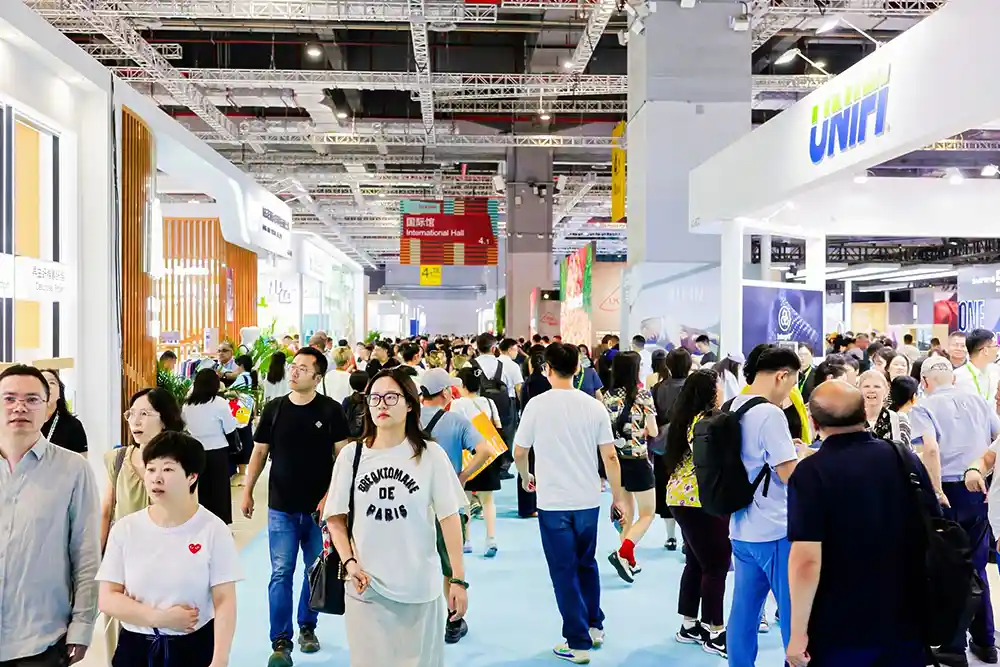
The previous Autumn Edition attracted nearly 3,700 exhibitors from 26 countries and regions, more than 100,000 visitors from 123 markets and 240,000 sq metres of exhibition space.
For mills and apparel suppliers, the 2026 line-up suggests that competitive sourcing is becoming increasingly multidimensional: cost and capacity remain important, but traceability, functionality, sustainability, design capability and digital integration are moving closer to the centre of buyer decisions. The clearest signal will come after the fair from which technologies and country propositions convert visitor interest into commercial orders.
