


Page 60 - November-December-2018
P. 60
60 61
the global textile market Mr Jos Notermans said that but if you want to print 50,000 meters of the fabric
rotary printing is still very cost effective as compared then rotary printing will be cheaper.
to digital printing. According to some customers,
some designs are printed better in rotary screens. Highlighting the importance of digital ink quality he
The fabric buyer doesn’t care if it was printed digital further added that inks should have color strength,
or rotary. So we give our customers the possibility of light fastness, rub fastness, wash fastness and
choosing for themselves whether digital or rotary. similar qualitative properties of rotary printing paste.
This is the key message, SPGPrints is bringing to Conventional low quality dye doesn’t much impact
ITMA Barcelona in 2019. At ITMA Barcelona, we will rotary printing but they are a big problem in digital
present digital and rotary printing side by side. printing. Developing Nebula, PIKE and Javelin inks,
USTER® ring spinning optimization system now offers Between digital and rotary printing, it’s not a with all of them SPGPrints strives to the highest
grades of purity which also increases the print heads
competition, we want to provide all solutions.
much more than end-break detection In terms of sustainability, a lot of steps have been lifetime. So, based on price a customer can decide to
buy cheaper ink but the ink will damage the print
taken not only in the digital printing but also in the head which is a bigger expense. But, buying quality
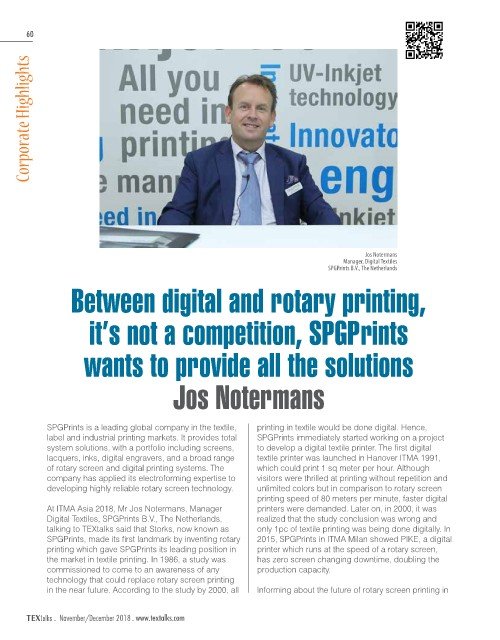
Jos Notermans conventional printing. SPGPrints have taken initiatives ink will result in triple the saving by saving the cost
Manager, Digital Textiles to ensure sustainability globally and also were the incurred by print head replacement.
SPGPrints B.V., The Netherlands
main visionary sponsors Textile Summit 2015. Water Talking about state of the art Archer Technology he
that is used in SPGPrints production plant is cleaned
Between digital and rotary printing, by the water treatment facility and reused by the stressed that in textiles with three dimensional
factory. Rotary screen production plants in Holland,
structure, the print heads needs to be away from the
it’s not a competition, SPGPrints India, Brazil and China, are taking all the measures to textile to not damage the print head. Because of this,
be line with sustainability goals and laws of the
ink mist can be encountered with due to spattered
ink droplets. The Fuji Films Samba heads used in the
company and in many cases they are even stricter
Archer technology are the first print heads made for
than what the country requires. The same
wants to provide all the solutions sustainability standards are used everywhere that textiles. So, archer technology maintains the required
distance as well as take away the ink mist,
have been defined by the company. At another ink
meanwhile, also enhances the print heads lifetime
treatment plant, no drop of water that is used in the
Jos Notermans ink facility goes to the sewer system. enabling SPGPrints to give a 30 months warranty on
print heads. Archer technology is a wish list for textile
Rotary screen printing still shows growth potential. Mr
Jos Notermans explained in terms of digital printing printing including ink viscosity, jetting speed and
drop size.
SPGPrints is a leading global company in the textile, printing in textile would be done digital. Hence, that at the moment approximately 30 billion sq
label and industrial printing markets. It provides total SPGPrints immediately started working on a project meters of fabric is printed globally which grows SPGPrints Experience Centre has been built
system solutions, with a portfolio including screens, to develop a digital textile printer. The first digital relative to world population per year about 1-2pc. So, specifically for two main goals which are giving
lacquers, inks, digital engravers, and a broad range textile printer was launched in Hanover ITMA 1991, even with a growth of 20-30pc of the digital printing customers the firsthand experience digital printing
of rotary screen and digital printing systems. The which could print 1 sq meter per hour. Although market, the growth is smaller than the growth of the with their fabrics and their designs, themselves with
company has applied its electroforming expertise to visitors were thrilled at printing without repetition and total market and the difference is still covered by our experts as their guide and to create an
developing highly reliable rotary screen technology. unlimited colors but in comparison to rotary screen rotary printing. We are still manufacturing rotary intermediate step where SPGPrints can run test drive
printing speed of 80 meters per minute, faster digital screen printers at our factory in India and are selling of their machines in their own facility but in customer
At ITMA Asia 2018, Mr Jos Notermans, Manager printers were demanded. Later on, in 2000, it was them worldwide. We believe, that our customers environment to know the pros and cons of the new
Digital Textiles, SPGPrints B.V., The Netherlands, realized that the study conclusion was wrong and should have the choice of how to print because both development before releasing it into the market. We
talking to TEXtalks said that Storks, now known as only 1pc of textile printing was being done digitally. In methods have their advantages. If you want to print are very happy that the it is fulfilling for what we have
SPGPrints, made its first landmark by inventing rotary 2015, SPGPrints in ITMA Milan showed PIKE, a digital 500 meters of a fabric digital printing will be cheaper founded it.
printing which gave SPGPrints its leading position in printer which runs at the speed of a rotary screen,
the market in textile printing. In 1986, a study was has zero screen changing downtime, doubling the
commissioned to come to an awareness of any production capacity.
technology that could replace rotary screen printing
in the near future. According to the study by 2000, all Informing about the future of rotary screen printing in
November/December 2018 November/December 2018

